
How you thaw meat affects both safety and texture. A slow, even thaw keeps meat tender and juicy, while a rushed thaw can warm the outside into the “danger zone” while the center stays frozen. This guide gives the safe methods, thawing times, and what never to do, whether you are thawing chicken, beef, lamb or fish.
The danger zone
Bacteria such as Salmonella, Campylobacter and E. coli multiply fastest between about 4°C and 60°C. Raw meat should spend as little time as possible in this range, and never more than 2 hours in total (1 hour above 32°C).
Method 1: in the refrigerator (best)
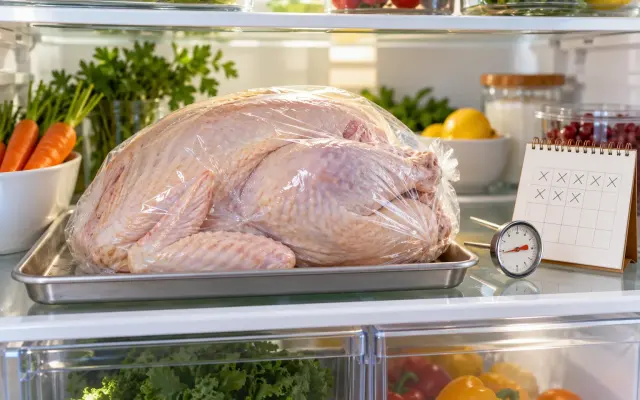
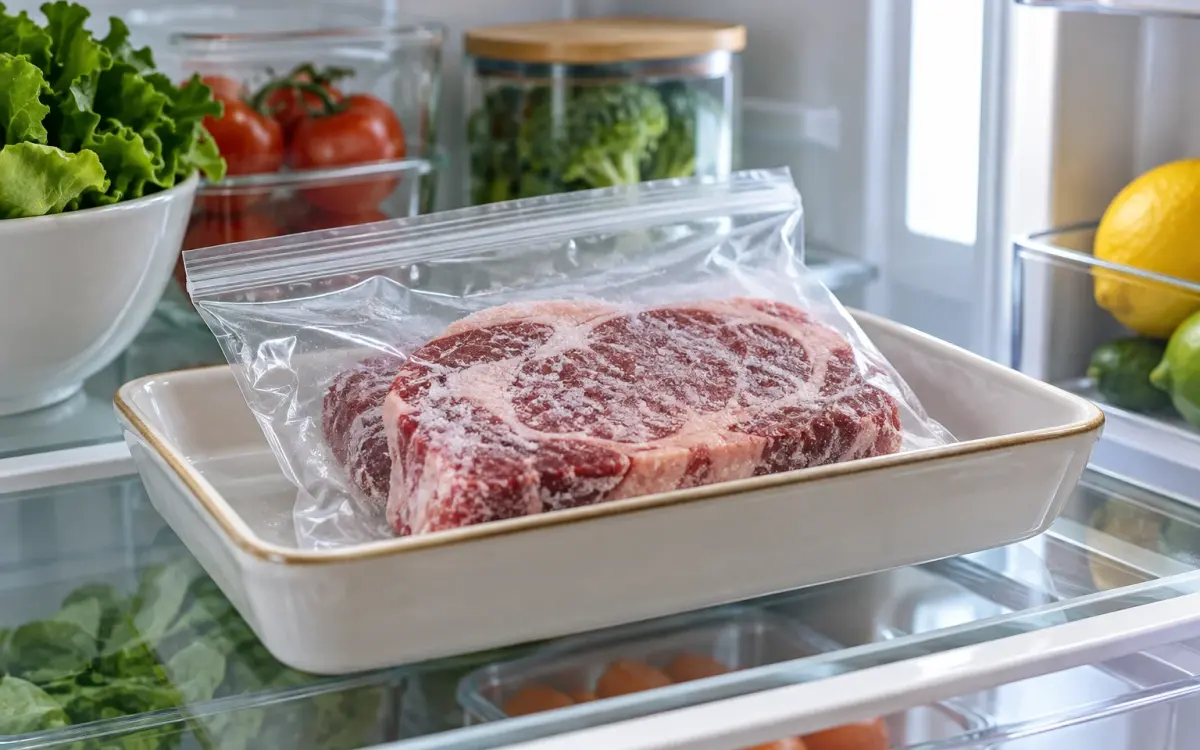
Place the meat on a plate or in a deep container on the lowest shelf, so juices cannot drip onto other foods. Keep it in its packaging or a sealed bag. Approximate times in a fridge at 4°C:
- Ground meat, steaks and chops (up to 500 g): 12 to 24 hours
- Chicken pieces: 24 hours
- Large roasts and whole chickens: about 24 hours for every 2 kg (5 pounds), so 1 to 2 days, and up to 3 days for a turkey
- Fish fillets: 8 to 12 hours
Meat thawed this way can be kept for 1 to 2 more days before cooking (ground meat and poultry 1 day; beef, lamb and pork cuts 3 to 5 days), and can be refrozen without cooking.
Method 2: in cold water (faster)
- Seal the meat in a leak-proof bag so it does not absorb water or spread bacteria.
- Submerge it in a bowl of cold tap water (not warm or hot) and change the water every 30 minutes so it stays cold.
- A pound (450 g) takes about an hour; 1 to 2 kg takes 2 to 3 hours. Cook it right after thawing, and do not refreeze it raw.
Method 3: in the microwave (fastest)
Use the defrost setting by weight, rotate and turn the meat, and cook it immediately afterward because some parts may start to cook. Remove any wrapping, plastic trays and foil first. Do not refreeze raw meat thawed this way.
Method 4: cook from frozen
It is safe to cook meat from frozen. Just allow about 50% more cooking time, and use a thermometer to check the center. This works well for stews, soups, braises, roasts and thick chicken pieces in the oven. It is less suited to pan-frying thick steaks, which will burn outside before the inside thaws. Do not wash or rinse frozen meat, and do not use the slow cooker for frozen meat.
What never to do
- Do not thaw on the kitchen counter or in hot water. The outside enters the danger zone between 4 and 60 degrees Celsius, where bacteria multiply quickly, while the center is still frozen.
- Do not leave thawed meat out for more than 2 hours (1 hour in hot weather).
- Do not wash raw meat, which spreads bacteria in the kitchen. Cooking kills them.
- Do not thaw meat in a slow cooker or on a warm stove top.
- Do not put hot water over the packaging to speed it up.
Can you refreeze?
Meat thawed in the refrigerator can be refrozen within a day or two without cooking, though quality can suffer slightly because of moisture loss. Meat thawed in cold water or the microwave must be cooked before you refreeze it. Cooked meat can be frozen again once it has cooled, but only once.
Tips for better texture
- Pat the thawed meat dry with paper towels before cooking; surface water prevents browning.
- Let thawed steaks stand for 20 minutes at room temperature before searing, but not longer.
- Season after thawing; salt draws out moisture.
- Freeze meat in flat, portion-sized bags with the air pressed out to thaw faster and more evenly, and label them with the date.
Safe cooking temperatures
- Poultry and ground poultry: 74°C
- Ground beef, lamb and pork: 71°C
- Whole cuts of beef, lamb and pork: 63°C with a 3-minute rest
- Fish: 63°C or until it flakes
For marinating after thawing, see our yogurt and saffron marinade, and for tender stew meat read what really tenderizes meat.
Frequently asked questions
How long can frozen meat be stored?
Frozen at -18°C it stays safe indefinitely, but quality is best within 3 to 6 months for ground meat and 6 to 12 months for steaks and roasts.
Is gray meat after thawing bad?
Color changes are normal. Rely on smell and texture: discard meat that smells sour or feels slimy.