









🔊 Cook mode: big steps, timers and voice control (say “next”), hands-free.
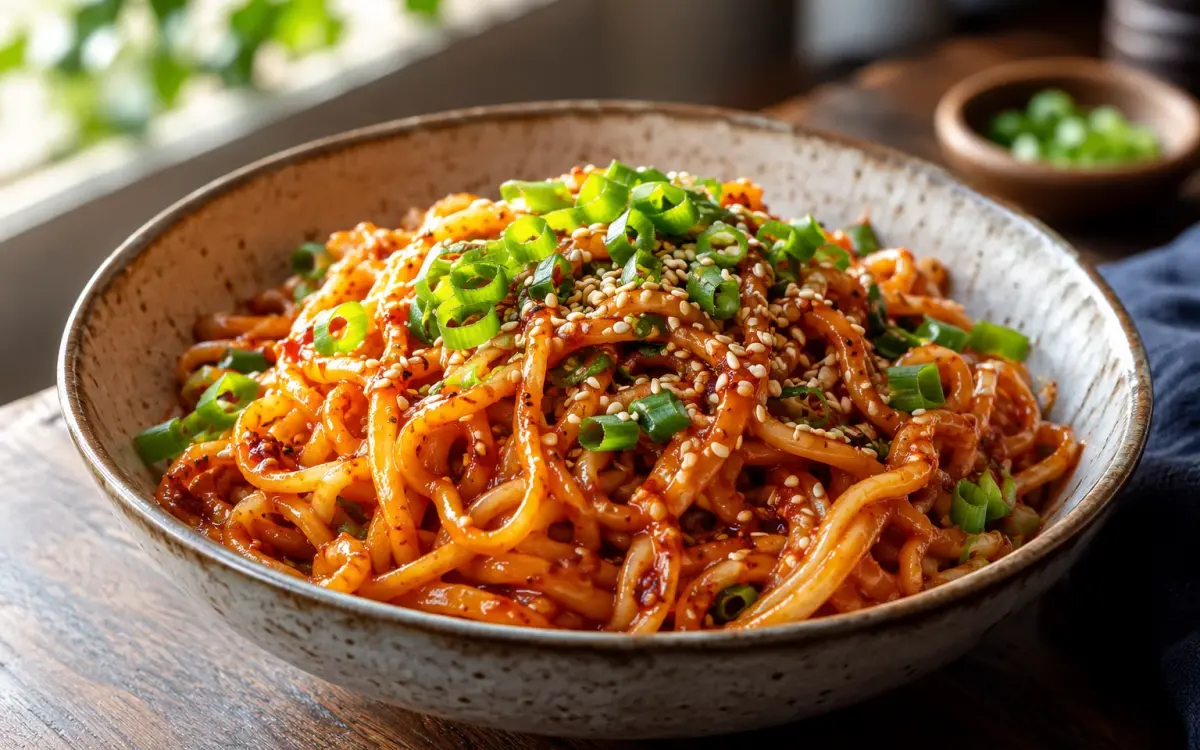
Gochujang butter noodles have become a favorite weeknight meal because they deliver big flavor from very few ingredients. Korean chili paste, butter, garlic and a splash of pasta water turn into a glossy, clingy sauce in the time it takes the noodles to cook. This recipe is for anyone who loves a little heat and wants dinner on the table in about 20 minutes.
Why this sauce works
Gochujang is a Korean fermented chili paste that is sweet, savory and spicy at the same time. Melted into butter with garlic, soy sauce and a little honey, it makes a rich sauce with real depth. The starchy pasta water is the secret: it helps the butter and the paste blend into a smooth coating instead of separating into an oily layer and a thick paste.
Know your gochujang
Brands differ a lot in heat, sweetness and saltiness. Some are mild and sugary, while others are fiery. Start with the amount in the recipe and taste before adding more, because it is easier to add spice than to remove it. Gochujang is usually sold in red tubs or squeeze tubes at Asian grocery stores and in many supermarkets. If you enjoy Korean flavors, our article on gochugaru, the Korean chili flakes explains another useful pantry staple.
Practical tips
- Save the pasta water. Set aside a cup before draining. It is the key to a glossy sauce.
- Cook the garlic briefly. About thirty seconds is enough; longer and it turns bitter.
- Add water gradually. Pour in a splash at a time while stirring until the sauce is glossy and clings to the noodles.
- Toss the noodles in the pan. One to two minutes of tossing over medium heat coats them and thickens the sauce slightly.
- Taste at the end. Gochujang and soy sauce are both salty, so adjust only after everything is combined.
Common mistakes
The most common problem is a sauce that looks greasy or clumpy. It usually means the heat was too high or not enough pasta water was used. Take the pan off the heat, add a splash of water and toss quickly. Another mistake is cooking the noodles too long; they continue to soften in the hot sauce, so drain them while they still have a little bite. Finally, avoid using salted butter together with a lot of soy sauce without tasting, or the dish can be too salty.
Substitutions and variations
- Toppings: a fried egg, kimchi, sliced cucumber or grated cheese all pair very well with the sauce.
- Noodles: spaghetti, ramen and udon all work. Ramen gives a chewier bite and udon a softer, thicker noodle.
- If you cannot find gochujang: a spoonful of miso with chili flakes and a pinch of sugar gives a similar sweet, savory heat, though the flavor is not identical. See our miso butter pasta for a milder version.
- Protein and vegetables: add shredded chicken, sautéed mushrooms, spinach or edamame for a fuller meal.
- Less spicy: use less gochujang and add a little extra honey or butter. A squeeze of lime brightens the flavor.
Serving ideas
Serve right away in warm bowls, topped with sliced green onions and sesame seeds. A cool cucumber salad or quick-pickled vegetables are a refreshing contrast to the heat. For a complete Asian-inspired dinner, pair it with a mild soup such as our Japanese miso soup.
Storage and make-ahead
These noodles are best eaten straight away, while the sauce is glossy. Leftovers keep in an airtight container in the fridge for a day or two; reheat in a pan with a splash of water to loosen the sauce. You can mix the sauce ingredients (gochujang, soy sauce, honey) in advance and keep them in a small jar in the fridge, which makes weeknight cooking even faster. Once opened, keep the gochujang tub in the fridge, tightly covered.
Allergen note
The dish contains wheat (noodles), soy (soy sauce, gochujang) and dairy (butter). Gochujang may also contain other grains, so check labels for guests with allergies or gluten sensitivity.
Frequently asked questions
Can I make it vegan?
Use olive oil or a plant-based butter in place of dairy butter, and use maple syrup instead of honey. Check that your noodles and gochujang contain no animal products.
How spicy is it?
It depends on your gochujang. Most versions are medium-hot, but you can control the heat by using less paste and balancing it with a little honey or extra butter.
Can I use gochugaru instead?
Gochugaru is dried chili flakes, not a paste, so it will not give the same sticky texture. You can add a pinch for extra heat, but it is not a direct substitute for gochujang.
Nutrition values are estimates based on USDA reference values and may vary depending on the brands and quantities you use.
Recette
Gochujang Butter Noodles in 20 Minutes
- Préparation
- 5 min
- Cuisson
- 15 min
- Total
- 20 min
- Calories
- 392
Ingrédients
Préparation
Cook the noodles in salted water until al dente. Reserve 120 ml of the cooking water, then drain.
Melt the butter in a wide pan over medium heat. Add the garlic and cook for 30 seconds.
Stir in the gochujang, soy sauce, honey and pasta water until smooth.
Add the noodles and toss for 1 to 2 minutes until the sauce coats them and looks glossy.
Top with green onions and sesame seeds and serve at once.
Astuces
- Add more pasta water a splash at a time if the sauce is too thick.
- Gochujang varies in heat, so start with less and taste.
Valeurs nutritionnelles par portion
- Calories
- 392
- Protéines
- 10 g
- Glucides
- 58 g
- Lipides
- 13 g
- Fibres
- 3 g
Valeurs estimées, à titre indicatif uniquement.
Commentaires