









🔊 Cook mode: big steps, timers and voice control (say “next”), hands-free.
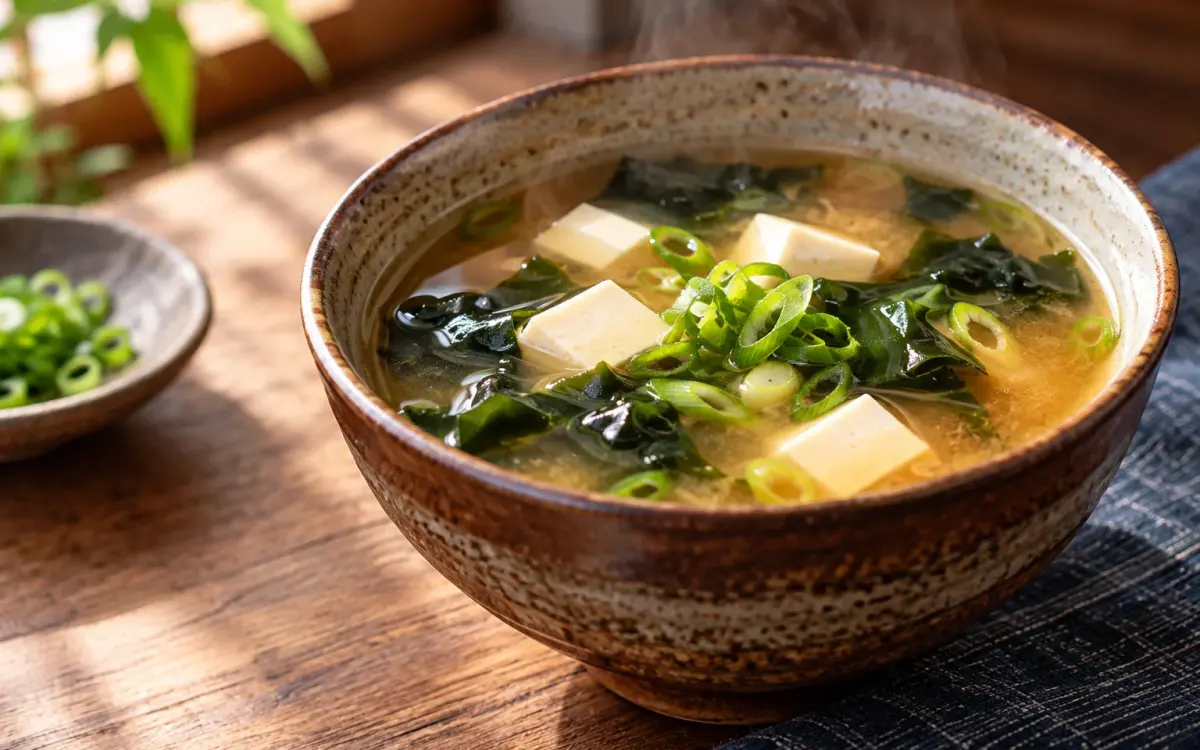
Miso soup is served with almost every Japanese breakfast and dinner. This version uses soft tofu and wakame seaweed, and it takes about 20 minutes from start to finish. It is for anyone who wants a light, warming soup that is easy to make once you know a few simple rules about dashi and miso.
Why miso soup is a staple
Miso soup is a light Japanese soup built on dashi, a stock traditionally made from kelp and dried fish, with fermented soybean paste stirred in at the end. It is quick, warming and low in calories, and it fits into a Japanese meal as a gentle companion to rice and other dishes. Tofu adds protein and a soft texture, and wakame adds a mild taste of the sea.
Understanding the ingredients
Dashi is the savory backbone. Traditional dashi uses kombu (dried kelp) and katsuobushi (dried bonito flakes). Instant dashi granules are a handy shortcut and are what the recipe suggests if you do not have time to make stock from scratch.
Miso is a paste of fermented soybeans, often with rice or barley. White miso is milder and slightly sweet, while red miso is deeper and saltier, so use less of it.
Wakame is a dried seaweed that expands considerably in water; a small amount goes a long way. Silken tofu is soft and delicate, so cut it gently.
Practical tips
- Heat the dashi until it steams, but do not boil. Gentle heat keeps the flavor clean.
- Never boil the soup after the miso goes in. Boiling dulls the aroma and flavor of miso.
- Dissolve the miso first. Put it in a ladle, add a little hot broth and stir until smooth, then pour it back into the pot off the heat. This avoids lumps.
- Rehydrate wakame in cold water. Five minutes is enough; drain it before adding.
- Add the tofu gently. Slide it in with a spoon so the cubes stay whole.
Common mistakes
The biggest mistake is boiling the soup after adding miso, which makes it taste flat and bitter. The second is using too much miso at once; add half, taste, then add more. A third is adding too much dried wakame, which swells into a crowd of seaweed. Use only a small pinch per serving.
Substitutions and variations
- Vegetarian soup: make dashi from kombu and shiitake mushrooms instead of fish.
- More vegetables: add sliced mushrooms, spinach, a few cubes of daikon or thin slices of carrot.
- Heartier version: add cooked rice or noodles to turn it into a small meal.
- Watch the salt: miso is salty, so go easy on extra soy sauce, and note that people on a low-salt diet may want to check with their doctor or dietitian.
Serving ideas
Serve hot, in small bowls, topped with thinly sliced green onions. Miso soup goes well with rice, grilled fish, a Japanese rolled omelette such as our tamagoyaki, or simple pickles. If you enjoy miso beyond soup, try our miso butter pasta.
Storage and make-ahead
Miso soup is best made and eaten fresh. If you reheat leftovers, do it gently without boiling, because high heat harms the flavor. You can prepare the dashi in advance and keep it in the fridge for a day or so, then add the tofu, wakame and miso just before serving. Once opened, keep the miso paste in the fridge, tightly covered.
Allergen note
Miso is made from soy, and some types contain barley (gluten). Traditional dashi contains fish. Check labels if you are cooking for guests with allergies.
Frequently asked questions
Can I use water instead of dashi?
You can, but the soup will taste much flatter. If you have no dashi, water with a teaspoon of instant dashi granules is a good compromise, as in the recipe.
Which miso is best for beginners?
White or light yellow miso is the easiest choice because it is mild and slightly sweet. Red miso is stronger, so begin with less.
Why is my miso soup cloudy?
A little cloudiness is normal, because miso is a paste that does not dissolve completely. Letting it settle slightly is perfectly fine. If you want a clear soup, strain the miso through a fine sieve as you add it.
Nutrition values are estimates based on USDA reference values and may vary depending on the brands and quantities you use.
Recette
Japanese Miso Soup with Tofu and Wakame
- Préparation
- 10 min
- Cuisson
- 10 min
- Total
- 20 min
- Calories
- 62
Ingrédients
Préparation
Soak the dried wakame in cold water for 5 minutes, then drain.
Heat the dashi in a pot until it steams. Do not let it boil.
Add the tofu and wakame and keep the heat low for 2 minutes.
Put the miso in a ladle, add a little hot broth and stir until smooth.
Pour the miso back into the pot off the heat.
Serve at once, topped with green onions.
Astuces
- Never boil the soup after adding miso. Boiling dulls its flavour.
- White miso is milder; red miso gives a deeper taste.
Valeurs nutritionnelles par portion
- Calories
- 62
- Protéines
- 5 g
- Glucides
- 6 g
- Lipides
- 2 g
- Fibres
- 1 g
Valeurs estimées, à titre indicatif uniquement.



Commentaires