

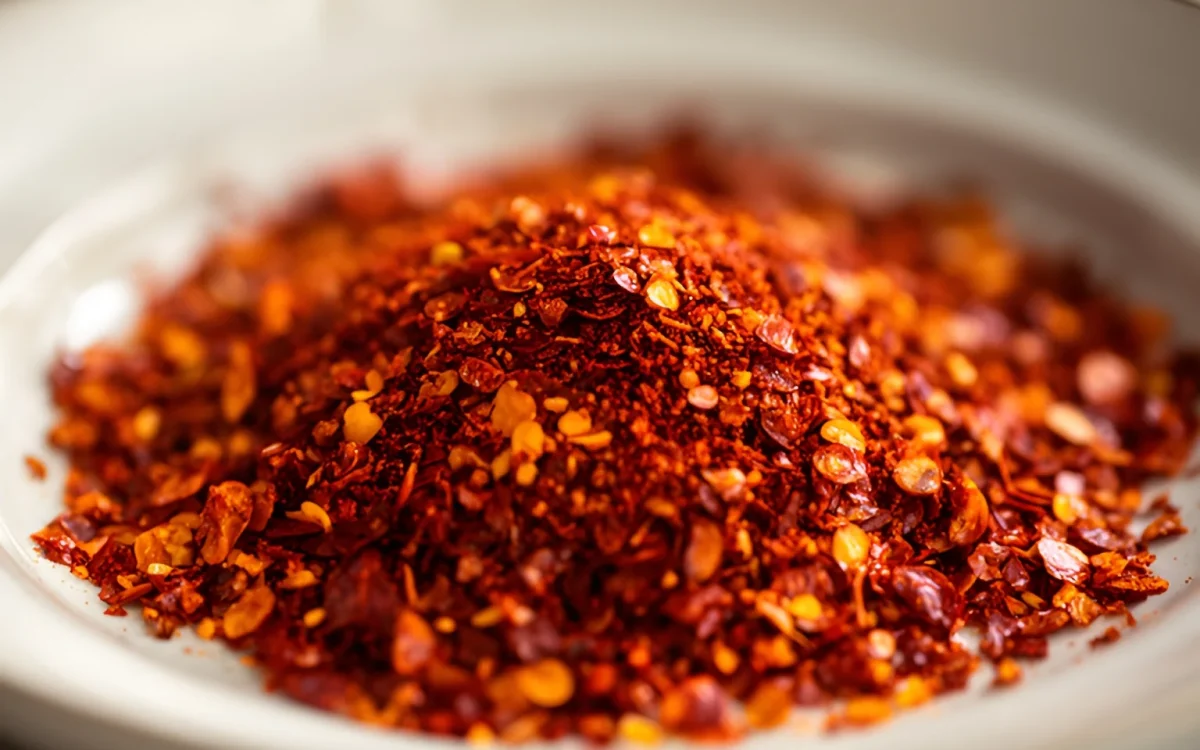
Gochugaru is a coarse Korean chili powder made from sun-dried red peppers with the seeds removed. It is the base of kimchi and many Korean sauces and stews, and it has become a favorite in home kitchens around the world because it adds bright red color and a warm, rounded heat without the sharp burn of many other chilies.
How gochugaru tastes
Gochugaru has a fruity, slightly sweet and lightly smoky flavor with a gentle, building heat. Most gochugaru is milder than cayenne or crushed red pepper flakes, so you can use it generously for color and flavor. Some brands sell two heat levels: mild (deol maewoon) and hot (maewoon). The texture also varies: coarse flakes are used for kimchi, while fine powder (gochutgaru for gochujang) blends smoothly into sauces.
Gochugaru vs other chili products
- Crushed red pepper flakes: contain seeds, taste sharper and are usually hotter.
- Cayenne: much hotter and finer, with less fruitiness. Use a quarter of the amount if you substitute it.
- Paprika: similar color and sweetness but almost no heat. Smoked paprika is closest in smokiness.
- Gochujang: a fermented paste made with gochugaru, rice and soybeans. It is sweet, salty and thick, not a dry spice. Try it in our gochujang butter noodles.
Easy ways to use gochugaru
- Eggs: Sprinkle over scrambled or fried eggs with a little sesame oil.
- Roasted vegetables: Toss carrots, potatoes or broccoli with oil, salt and 1 teaspoon of gochugaru before roasting.
- Chili butter: Mix into softened butter with garlic for toast, corn on the cob or grilled fish.
- Dressings: Whisk into a vinaigrette with garlic, soy sauce, rice vinegar and sesame oil.
- Soups and stews: Stir into chicken soup, lentil soup or bean stews for warmth and color.
- Popcorn and snacks: Shake over buttered popcorn or roasted chickpeas.
- Quick cucumber salad: Toss sliced cucumber with salt, rice vinegar, sesame oil, sugar and gochugaru.
A 5-minute gochugaru chili oil
- Put 3 tablespoons gochugaru, 1 grated garlic clove, 1 teaspoon sesame seeds and a pinch of salt in a heatproof bowl.
- Heat 120 ml neutral oil until it shimmers (about 150 to 160°C), but do not let it smoke.
- Pour the oil over the chili mix carefully. It will sizzle.
- Stir in 1 teaspoon soy sauce once cool. Keep in a clean jar in the fridge and use within 2 weeks.
How much heat to expect
Start with half a teaspoon per serving and taste. Heat builds slowly, so wait a minute before adding more. In kimchi, recipes use far more because the cabbage, salt and fermentation balance the heat.
Substitutes for gochugaru
The best simple substitute is a mix of 2 parts sweet paprika (or smoked paprika) and 1 part crushed red pepper flakes. Aleppo pepper and Kashmiri chili powder are also good, mild and fruity options.
Buying and storing
Look for flakes that are bright red, not brown, and a bag that says “product of Korea” or “sun-dried” (taeyangcho) if you want the classic flavor. Store in an airtight container away from light and heat. For long storage, keep it in the freezer; it stays bright for up to a year. At room temperature, use within six months for the best flavor.
Who should be careful?
Chili can irritate the stomach, especially for people with reflux or ulcers. Start with a small amount and adjust to your taste. Wash your hands after handling it and keep it away from your eyes.
Frequently asked questions
Is gochugaru very spicy?
Usually not. Most gochugaru is mild to medium, much milder than cayenne.
Can I use gochugaru instead of chili powder?
Yes, but American chili powder is a blend with cumin and oregano, so the flavor will be different.
Does gochugaru go bad?
It does not spoil quickly, but it loses color and flavor. Brown, dull flakes should be replaced.

Comments