

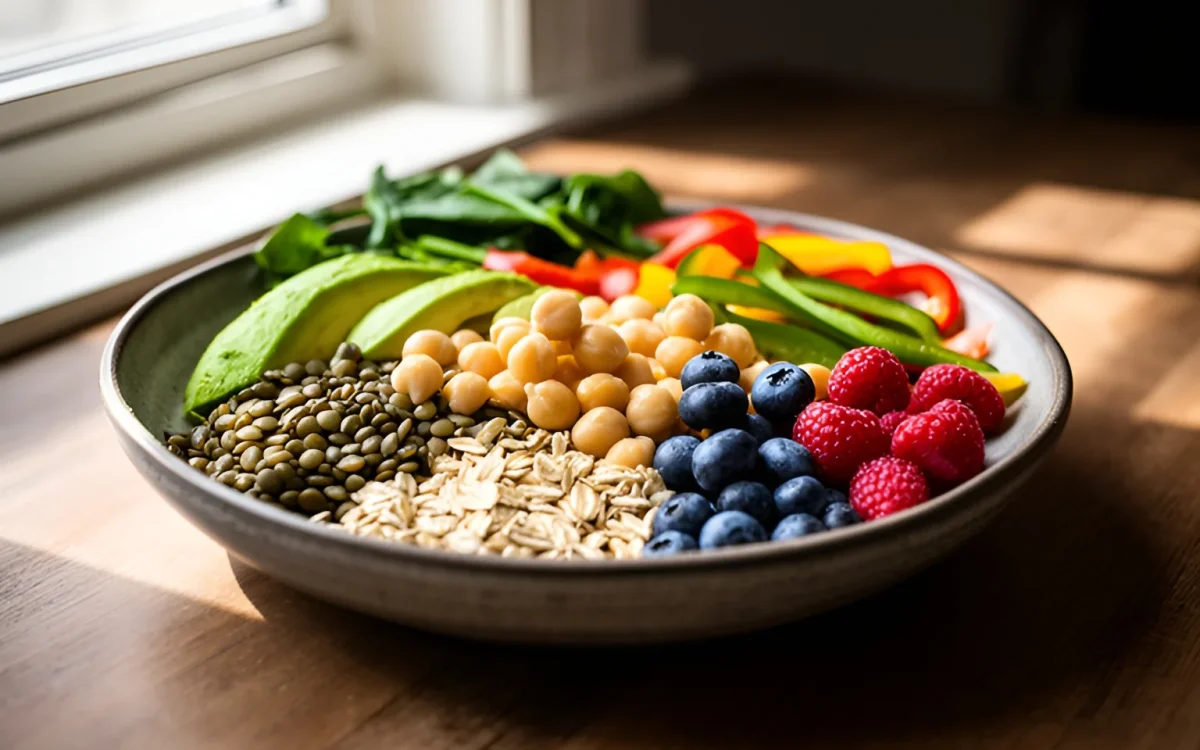
Fibermaxxing, the habit of deliberately adding more fiber to every meal, is one of the nutrition trends food writers are watching in 2026. The reason is simple: most adults eat far less fiber than recommended, often only about half. The trend is not about eating an extreme amount, just about adding a little more at each meal, from whole foods.
What is fiber?
Fiber is the part of plant foods that your body cannot fully digest. There are two main types, and most plant foods contain both:
- Soluble fiber dissolves in water to form a gel. It helps lower LDL cholesterol and slows sugar absorption. Found in oats, beans, lentils, apples, citrus, chia and flaxseed.
- Insoluble fiber adds bulk and helps food move through the gut. Found in whole grains, wheat bran, nuts, and the skins of vegetables and fruit.
- Prebiotic fibers (inulin, resistant starch) feed beneficial gut bacteria. Found in onions, garlic, bananas, cooled rice and potatoes, and oats.
Why fiber matters
- Digestion: supports regular bowel movements and helps prevent constipation.
- Fullness: helps you feel full for longer, which supports a healthy weight.
- Heart health: soluble fiber lowers LDL cholesterol; diets rich in whole grains, legumes, fruit and vegetables are linked with a lower risk of heart disease.
- Blood sugar: slows glucose absorption and helps reduce spikes after meals.
- Gut bacteria: fermentable fibers feed beneficial bacteria, which produce short-chain fatty acids that support the gut lining.
- Long-term health: diets high in fiber are linked with lower risk of type 2 diabetes and bowel cancer.
How much do you need?
Common guidelines suggest about 25 g a day for women and 38 g for men up to age 50, and slightly less after 50 (21 g for women, 30 g for men). Another rule is 14 g per 1,000 calories. Your doctor or dietitian can give you a number that suits your health.
Fiber content of common foods (approximate)
- Lentils, cooked (1 cup): 15 g
- Black beans or chickpeas, cooked (1 cup): 12 to 15 g
- Raspberries (1 cup): 8 g
- Pear with skin (1 medium): 5.5 g
- Avocado (half): 5 g
- Oats, cooked (1 cup): 4 g
- Chia seeds (1 tablespoon): 4 g
- Almonds (30 g): 3.5 g
- Broccoli, cooked (1 cup): 5 g
- Whole-wheat bread (1 slice): 2 to 3 g
Easy ways to add fiber at every meal
- Breakfast: oats with chia seeds and berries, or whole-grain toast with avocado.
- Lunch: a salad with chickpeas, or a bean or lentil soup.
- Dinner: half of the plate filled with vegetables, and brown rice or whole-wheat pasta instead of white.
- Snacks: an apple with peanut butter, a pear, a handful of almonds, or roasted chickpeas.
- Swaps: whole fruit instead of juice, whole grains instead of refined, and leave the skin on potatoes and apples.
- Add-ins: a spoon of ground flaxseed or chia in yogurt, smoothies or oatmeal; beans in salads, rice and soups.
A sample 30 g day
- Breakfast: 1 cup cooked oats, 1 tablespoon chia, 1/2 cup raspberries (about 10 g)
- Lunch: lentil soup with a slice of whole-wheat bread and a salad (about 12 g)
- Snack: a pear with almonds (about 7 g)
- Dinner: salmon or chicken with broccoli and brown rice (about 7 g)
Go slowly
Increasing fiber too fast can cause gas, bloating and cramps. Add a few grams at a time over two to three weeks, and drink enough water, about 1.5 to 2 liters a day, so the fiber can move through your digestive system. Without enough fluid, a lot of fiber can cause constipation instead of preventing it.
Fiber supplements?
Whole foods are better because they bring vitamins and other nutrients. Supplements such as psyllium husk can help people who cannot reach their goal, but start low and ask your pharmacist if you take medicines, because fiber can reduce the absorption of some drugs if taken at the same time.
Who should be careful?
- People with certain bowel conditions (Crohn’s disease flares, diverticulitis flares, bowel strictures or recent bowel surgery) or who are about to have a colonoscopy may need to adjust fiber intake.
- People with IBS may tolerate some fibers (oats, psyllium) better than others (wheat bran, some beans).
- Very high fiber intake can reduce absorption of iron, zinc and calcium; a varied diet usually prevents problems.
- Ask your doctor first if you have a health condition.
Frequently asked questions
Does fiber cause weight loss?
It helps you feel full, which supports weight control, but it is not a diet by itself.
Is 50 g of fiber a day too much?
For most healthy people it is safe if built up slowly, but it is not necessary.
Start with one change at breakfast tomorrow. Small, steady steps are easier to keep. This is general information, not medical advice.

Comments