

🔊 Cook mode: big steps, timers and voice control (say “next”), hands-free.
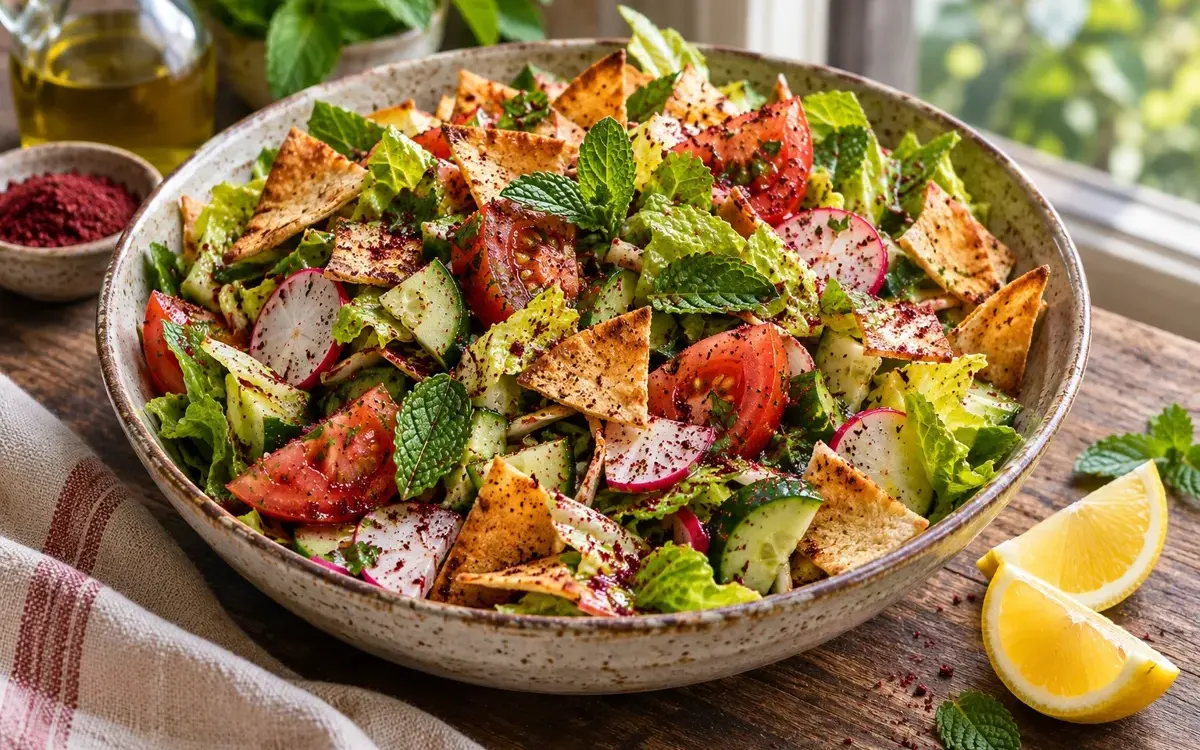
Fattoush is the great bread salad of the Levant, especially Lebanon and Syria: a colorful mix of crisp lettuce, tomatoes, cucumbers, radishes and fresh herbs, topped with crunchy toasted pita and dressed with lemon, olive oil and tart sumac. It was born as a clever way to use stale flatbread, and today it is a staple of Middle Eastern tables, light enough for summer and fresh enough to brighten a winter meal.
What makes a great fattoush
- Crisp vegetables. Cut everything to a similar size and keep it cold.
- Plenty of herbs. Mint and flat-leaf parsley are essential, and purslane is traditional if you can find it.
- Toasted pita. Bake or pan-fry torn pita until golden; add it just before serving so it stays crunchy.
- Sumac and lemon. Sumac gives a bright, tangy, slightly fruity flavor, and a little pomegranate molasses gives the dressing a sweet-sour note.
Tips
- Salt the cucumbers and tomatoes lightly and drain for 5 minutes, so the salad is not watery.
- Dress the salad only when you are ready to eat.
- Make the dressing in a jar and shake it; it keeps in the fridge for 5 days.
- Toast the pita in the oven at 200 C (400 F) for 8 to 10 minutes with a little olive oil.
Variations
- Add chickpeas or grilled halloumi for a main course.
- Add sliced green pepper or bell pepper for more crunch.
- For gluten-free fattoush, use gluten-free pita or add toasted nuts and seeds.
- Pair with chicken kebab or kebab koobideh for a Middle Eastern feast.
Serving
Serve fattoush as a side with grilled meat, falafel or rice dishes, or as a light lunch. For a similar fresh salad from Iran, try our Shirazi salad.
Storage
Fattoush is best fresh. Store the dressing, chopped vegetables and pita chips separately and assemble just before serving.
A short history of fattoush
The word fattoush comes from the Arabic for crumbs or bits of bread. The salad is traditionally made in the Levant, in Lebanon and Syria, as a way to use stale flatbread, and it is one of the most popular salads of the region. Sumac, a native spice, is its signature flavor.
Make it a full meal
Add a protein to make fattoush a complete dinner: grilled chicken, falafel, chickpeas or halloumi. Serve with hummus and warm pita on the side, and finish with a mint tea.
Frequently asked questions
What is sumac?
A dark red spice made from dried berries, with a tangy lemony flavor. You can find it in Middle Eastern shops; use lemon zest as a substitute.
Can I make fattoush ahead?
Prepare the parts ahead and combine at the last minute so the pita stays crisp.
Is fattoush healthy?
Yes. It is full of vegetables and herbs and uses olive oil for fat; the pita adds carbohydrates.
Recipe
Fattoush Salad: Crunchy Lebanese Salad with Sumac and Pita Chips
- Prep
- 20 min
- Cook
- 10 min
- Total
- 30 min
- Calories
- 305
Ingredients
Method
Heat the oven to 200 C (400 F). Toss the pita with 3 tablespoons olive oil, spread on a tray and bake for 8 to 10 minutes until golden and crisp.
Whisk the lemon juice, 4 tablespoons olive oil, sumac, pomegranate molasses, garlic and salt.
Put the lettuce, tomatoes, cucumbers, radishes, spring onions, mint and parsley in a large bowl.
Pour over the dressing and toss gently.
Add the pita chips just before serving and sprinkle with a little extra sumac.
Tips
- Add the pita at the last minute so it stays crunchy.
- Drain salted cucumbers and tomatoes for 5 minutes to avoid a watery salad.
- Keep the vegetables cold until serving.
Nutrition per serving
- Calories
- 305
- Protein
- 6 g
- Carbs
- 30 g
- Fat
- 18 g
- Fiber
- 5 g
Estimated values, for information only.
Vitamins and minerals per serving
- Vitamin K100%+
- Vitamin A91%
- Folate74%
- Vitamin C67%
- Vitamin E29%
- Iron27%
Share of an adult’s daily value (FDA). Estimated from the main ingredients using USDA data, ignoring cooking losses; for information only. What do I need each day?
Comments