




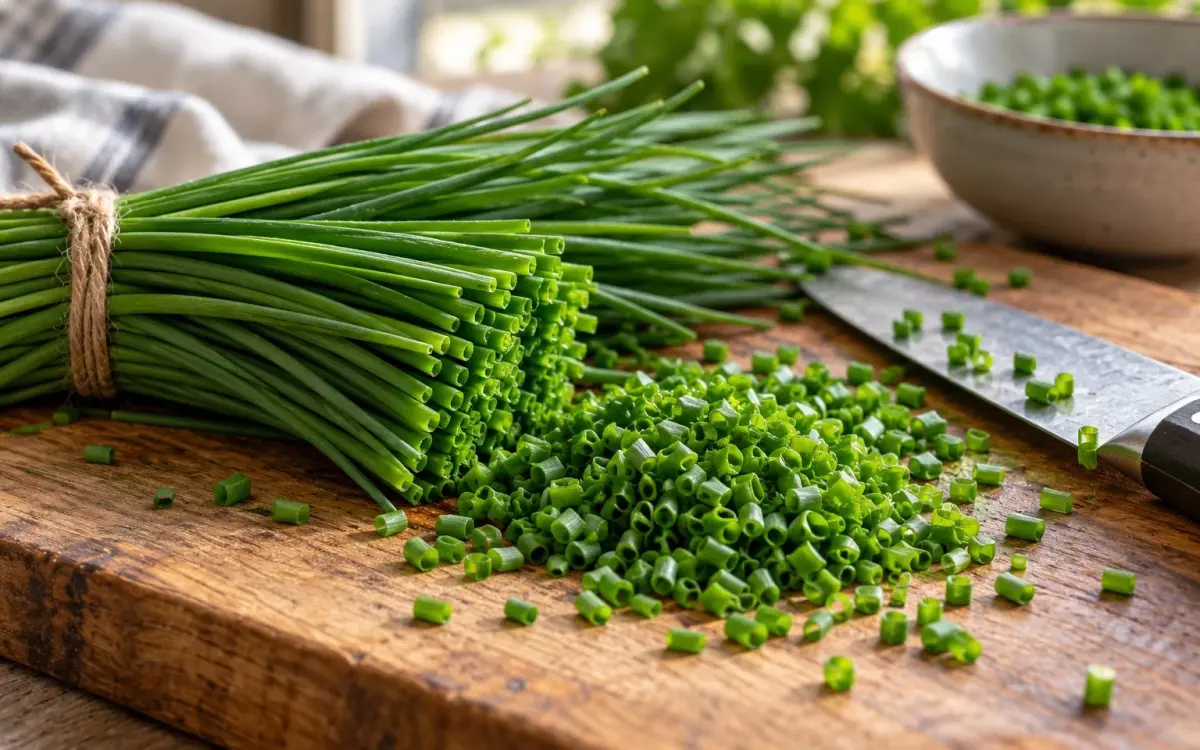
Chives are slender, hollow green herbs from the onion family (Allium schoenoprasum), with a mild, fresh onion-and-garlic flavor. They are one of the easiest herbs to grow, they come back every spring, and a small handful brightens eggs, potatoes, soups and dips with almost no calories.
Chives vs green onions vs garlic chives
- Chives: thin, round, hollow leaves; the mildest flavor. Used raw or added at the very end.
- Green onions (scallions): thicker, with a white base; stronger flavor. Can be cooked.
- Garlic chives (Chinese chives): flat leaves with a garlicky taste; common in dumplings and stir-fries.
- Persian tareh: the “chive” in Persian herb mixes is usually a type of leek leaf, closer to flat garlic chives in shape, used in kuku sabzi and ghormeh sabzi.
Nutrition
A tablespoon of chopped chives has only about 1 calorie. Per 100 g (far more than you would eat at once), chives provide:
- Vitamin K, important for blood clotting and bones
- Vitamin C and vitamin A (from carotenoids)
- Folate, calcium, iron and potassium in small amounts
- Sulfur compounds and flavonoids with antioxidant activity
Because a serving is small, chives add flavor and some nutrients but are not a main source of any one vitamin.
Possible benefits
- Less salt: their fresh, oniony flavor helps you use less salt in eggs, potatoes and dips.
- Immune support: vitamin C and antioxidants contribute to normal immune function.
- Heart health: diets rich in allium vegetables are linked with healthier cholesterol and blood pressure in observational studies.
- Bone health: vitamin K supports bones.
- Gentle on digestion: chives are usually easier to tolerate than raw onion or garlic.
Easy ways to use chives
- Snip over omelets, scrambled eggs and a Spanish potato omelette
- Stir into sour cream for baked potatoes, or into a loaded baked potato soup
- Mix into yogurt, cream cheese or cottage cheese dips
- Add to mashed potatoes, potato salad and egg salad
- Sprinkle over soups, rice and fish at the end
- Make chive butter: soft butter, chopped chives, lemon zest and salt
- Use the purple flowers as an edible garnish in salads
Cooking tips
- Snip with sharp scissors rather than chopping with a dull knife, which bruises the leaves.
- Add at the end of cooking; heat quickly dulls the flavor and color.
- Use about 1 tablespoon of chopped chives per serving.
- If you have no chives, use the green part of a spring onion, sliced very thin.
How to grow chives in a pot
- Buy a small plant or sow seeds in a pot at least 15 cm deep with good drainage.
- Place it on a sunny windowsill or balcony; chives like at least 6 hours of light.
- Water when the top of the soil is dry.
- Cut leaves 2 to 3 cm above the soil. They regrow within a few weeks.
Storage
Wrap fresh chives in a damp paper towel and keep them in a container in the refrigerator for up to a week. To freeze, snip them, spread on a tray, freeze and store in a bag for up to 6 months. Use frozen chives straight in hot dishes. Dried chives lose most of their flavor.
Who should be careful?
- Chives, like onions and garlic, are toxic to cats and dogs. Keep plants and food scraps away from pets.
- People on blood thinners such as warfarin should keep vitamin K intake steady.
- If onions upset your stomach, start with a small amount.
Frequently asked questions
Can I eat chive flowers?
Yes. Pull the small florets apart and sprinkle them over salads; they taste like mild onion.
Can I cook chives?
You can, but they are best added at the end or used raw.
Sources
This article is general information, not medical advice. If you have a health condition, talk to your doctor or a registered dietitian.