
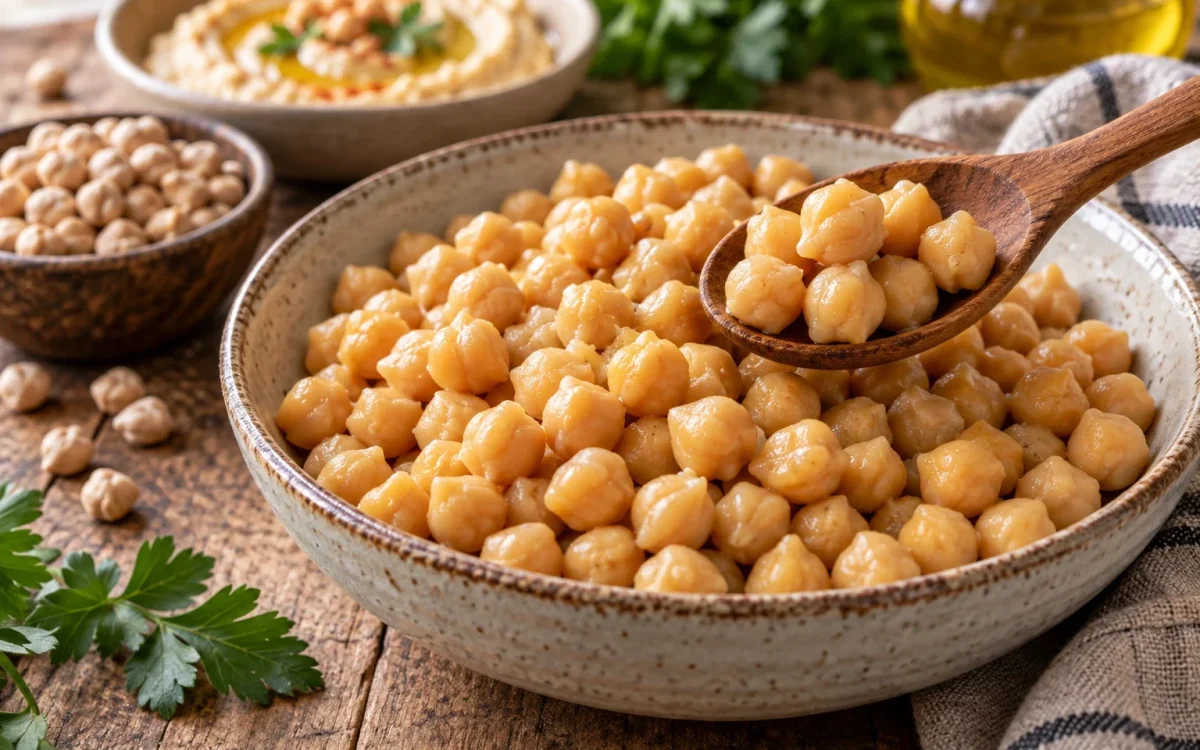
Chickpeas, also called garbanzo beans, are one of the oldest and most useful legumes: affordable, filling and rich in nutrients. They are the base of hummus, falafel and chana masala, and a key ingredient in Persian dishes such as abgoosht, ash and shole ghalamkar. Dried, canned or roasted, they make it easy to eat more plant protein and fiber.
Nutrition (cooked, per 100 g, approximate)
- About 165 calories
- About 9 g protein
- About 8 g fiber, both soluble and insoluble
- 27 g carbohydrate, mostly slow-digesting starch
- Folate (about 40% of daily needs), iron, magnesium, phosphorus, zinc, copper and manganese
- Very little fat, mostly unsaturated
Possible benefits
- Plant protein: a good source for vegetarians and anyone eating less meat. Combine with grains such as rice or bread over the day for a complete protein.
- Digestion: fiber helps prevent constipation and feeds beneficial gut bacteria.
- Blood sugar: chickpeas have a low glycemic index; their protein and fiber slow the rise in blood sugar after a meal.
- Heart health: soluble fiber helps lower LDL cholesterol, and potassium and magnesium support healthy blood pressure.
- Fullness and weight: protein and fiber keep you full for longer.
- Iron and folate: useful for vegetarians and during pregnancy. Eat them with vitamin C foods such as tomatoes, peppers or lemon to absorb more iron.
Side effects and who should be careful
- Gas and bloating are common, because chickpeas contain sugars (oligosaccharides) that gut bacteria ferment.
- People with IBS may react to larger portions; small portions of canned, rinsed chickpeas are often better tolerated.
- People with advanced kidney disease may need to limit potassium and phosphorus; ask a doctor or dietitian.
- Chickpeas can cause allergic reactions in a few people, especially those allergic to other legumes such as lentils or peas.
- Never eat raw or undercooked dried chickpeas; they are hard to digest and contain anti-nutrients that cooking removes.
How to soak and cook dried chickpeas
- Rinse 250 g (about 1¼ cups) of dried chickpeas and pick out any stones.
- Soak in plenty of cold water for 8 to 12 hours. Change the water once if you can.
- Drain, rinse and cover with fresh water by 5 cm.
- Bring to a boil, skim off the foam, then simmer gently with the lid partly on for 1 to 1½ hours, until very soft. A pressure cooker takes 15 to 20 minutes after soaking.
- Add salt in the last 20 minutes. For extra-creamy hummus, add ½ teaspoon of baking soda to the cooking water.
250 g of dried chickpeas makes about 600 g cooked, roughly the same as two cans. Cooked chickpeas keep in the fridge for 4 to 5 days and freeze well for 3 months in their liquid.
Canned vs dried
Canned chickpeas are just as nutritious and very convenient. Rinse them well to remove up to 40% of the added salt and some of the gas-causing sugars. Dried chickpeas are cheaper, have a better texture and let you control the salt. Save the canning liquid (aquafaba): it whips like egg white for vegan meringues and mousse.
Tips to ease digestion
- Start with small portions and increase gradually; the gut adapts.
- Soak dried chickpeas well, discard the water and cook them until very soft.
- Cook them with cumin, fennel, ginger or a pinch of asafoetida.
- Drink enough water when you eat more fiber.
Easy ways to eat them
- Hummus with tahini, lemon, garlic and olive oil
- Roasted chickpeas with paprika as a crunchy snack (roast at 200°C for 30 to 40 minutes)
- Soups and stews, such as Persian abgoosht and ash reshteh
- Salads with cucumber, tomato and parsley, or a chopped Italian salad
- Roasted butternut squash and chickpeas with lemon tahini
- Curries such as chana masala, with rice
Frequently asked questions
Are chickpeas good for weight loss?
They can help, because they are filling. Keep portions to about ½ to 1 cup cooked.
Do I have to soak chickpeas?
It is strongly recommended. Unsoaked chickpeas take much longer to cook and are harder to digest.
This is general information, not medical advice.