

🔊 Cook mode: big steps, timers and voice control (say “next”), hands-free.
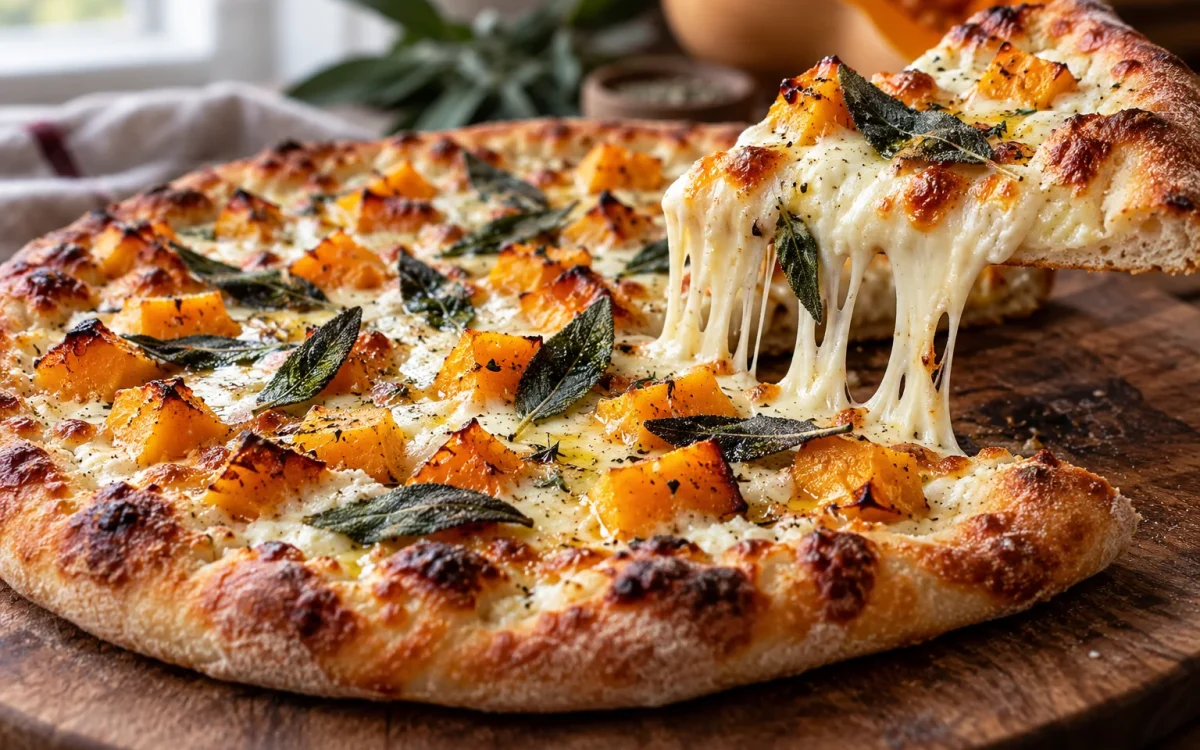
When the first cold evenings arrive, a pizza topped with sweet roasted butternut squash, jammy caramelized onions and crisp sage is the kind of dinner that makes the whole kitchen smell like autumn. It is a white pizza, so there is no tomato sauce: a thin layer of ricotta and garlic holds everything together, and mozzarella melts over the top. It works for a relaxed weeknight, a Friday family night, or as a vegetarian main on a Thanksgiving-week table.
Why this combination works
Squash is naturally sweet, onions add depth, sage brings an earthy, slightly peppery note, and a pinch of chili flakes with a drizzle of honey ties the sweet and savory sides together. Roasting the squash first matters: raw squash on a pizza stays hard and watery, while roasted cubes caramelize at the edges and stay tender.
Tips for a crisp, not soggy, pizza
- Cut the squash small. Cubes of about 1 cm roast quickly and sit flat on the dough.
- Dry the toppings. Pat the roasted squash and onions on paper towel if they look wet, and drain the ricotta in a sieve for 15 minutes.
- Heat the tray. Preheat a heavy baking tray or pizza stone for at least 20 minutes so the base browns underneath.
- Add the sage late. Fresh sage leaves tossed in oil go on for the last 3 minutes so they turn crisp rather than burnt.
- Stretch by hand. Let the dough rest at room temperature for 30 minutes first; it will stretch without snapping back.
Variations
- Swap the squash for pumpkin or sweet potato.
- Replace the ricotta with crumbled goat cheese or feta for a tangier pizza.
- Add toasted walnuts or pecans after baking for crunch.
- For a meat version, scatter crisp bacon or sliced sausage over the top.
- Use a wholemeal dough or a store-bought base on a busy day.
Serving ideas
Serve with a peppery arugula salad dressed with lemon and olive oil, or a pomegranate and walnut salad if you are planning a Yalda or Thanksgiving menu. Cut into small squares and it becomes an easy party appetizer.
Storage and reheating
Keep leftover slices in an airtight container in the fridge for up to 2 days. Reheat in a hot oven or a dry skillet with a lid for 5 minutes; the microwave makes the crust soft. The roasted squash and caramelized onions can be made a day ahead, which turns assembly into a 15-minute job. Baked pizza does not freeze as well as the dough does, so freeze the dough balls instead.
Recipe
Butternut Squash and Sage White Pizza: A Cozy Autumn Dinner
- Prep
- 20 min
- Cook
- 45 min
- Total
- 1 h 5 min
- Calories
- 540
Ingredients
Base
Topping
Method
Heat the oven to 220°C and put a heavy baking tray inside to heat.
Toss the squash cubes with the olive oil and half the salt, spread them on a lined tray and roast for 20 minutes until tender with golden edges.
Meanwhile melt the butter in a skillet, add the onion with a pinch of salt and cook on medium-low heat for 25 minutes, stirring now and then, until soft and caramelized.
Mix the drained ricotta with the garlic, the remaining salt and the pepper.
Raise the oven to 250°C. Divide the dough in two and stretch each piece into a thin round on baking paper dusted with cornmeal.
Spread the ricotta mixture over each base, leaving a 2 cm border, then add the mozzarella, onions and squash.
Slide the pizzas with the paper onto the hot tray and bake for 8 minutes.
Toss the sage leaves in a little oil, scatter them on top and bake for 3 more minutes until the crust is golden and the sage is crisp.
Finish with the honey and chili flakes, rest for 2 minutes and slice.
Tips
- Drain the ricotta so the pizza stays crisp.
- Roast the squash and caramelize the onions a day ahead to save time.
- Freeze extra dough balls instead of baked pizza.
Nutrition per serving
- Calories
- 540
- Protein
- 22 g
- Carbs
- 68 g
- Fat
- 19 g
- Fiber
- 4 g
Estimated values, for information only.
Vitamins and minerals per serving
- Vitamin A76%
- Vitamin B1258%
- Calcium29%
- Vitamin C26%
- Vitamin E18%
- Zinc17%
Share of an adult’s daily value (FDA). Estimated from the main ingredients using USDA data, ignoring cooking losses; for information only. What do I need each day?
Comments