

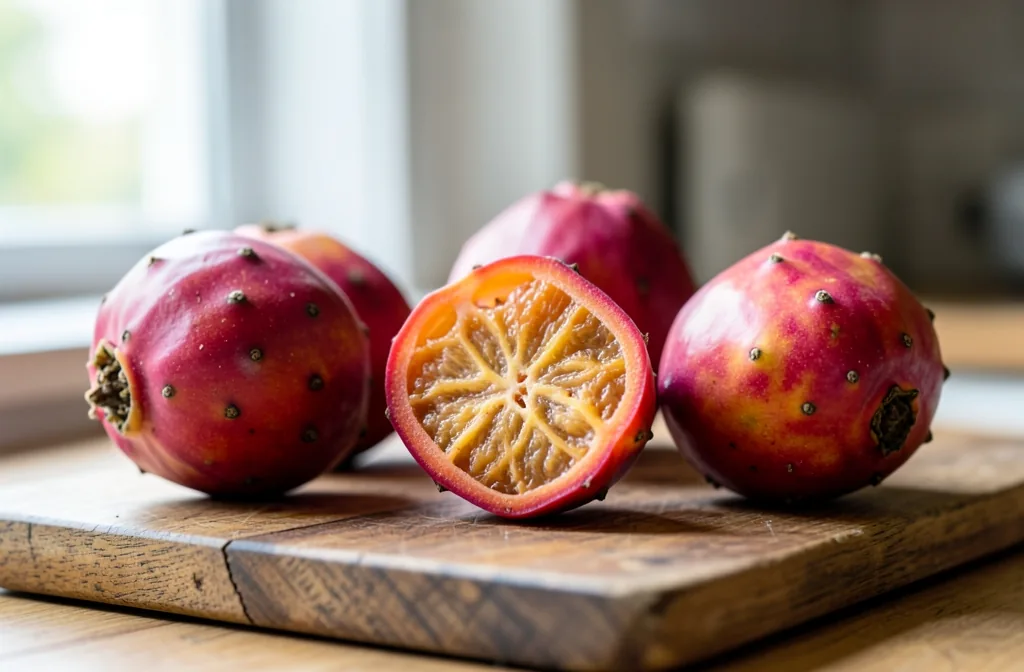
Prickly pear, the fruit of the nopal cactus, is becoming a popular ingredient in juices, sorbets, and snacks. It is naturally sweet, colorful, and low in calories, which explains part of its appeal.
Possible benefits
- It provides vitamin C and fiber.
- It contains plant pigments called betalains, which act as antioxidants.
- Some small studies suggest it may help with blood sugar control, but more research is needed.
Possible risks
- The tiny spines on the skin can get into your fingers. Wear gloves when peeling.
- Eating a lot can cause digestive upset or loose stools.
- It may lower blood sugar. If you take diabetes medicine, talk to your doctor before eating it regularly.
- Pulp and juice can cause a red color in urine and stool, which is harmless but can be confused with blood.
How to eat it safely
- Wear thick gloves and hold the fruit with tongs.
- Cut off both ends, make a shallow cut along the length, and peel the skin back.
- Eat the flesh as is, or blend it into a drink. The small seeds are edible.
Enjoy prickly pear in moderation as part of a varied diet.

Comments