




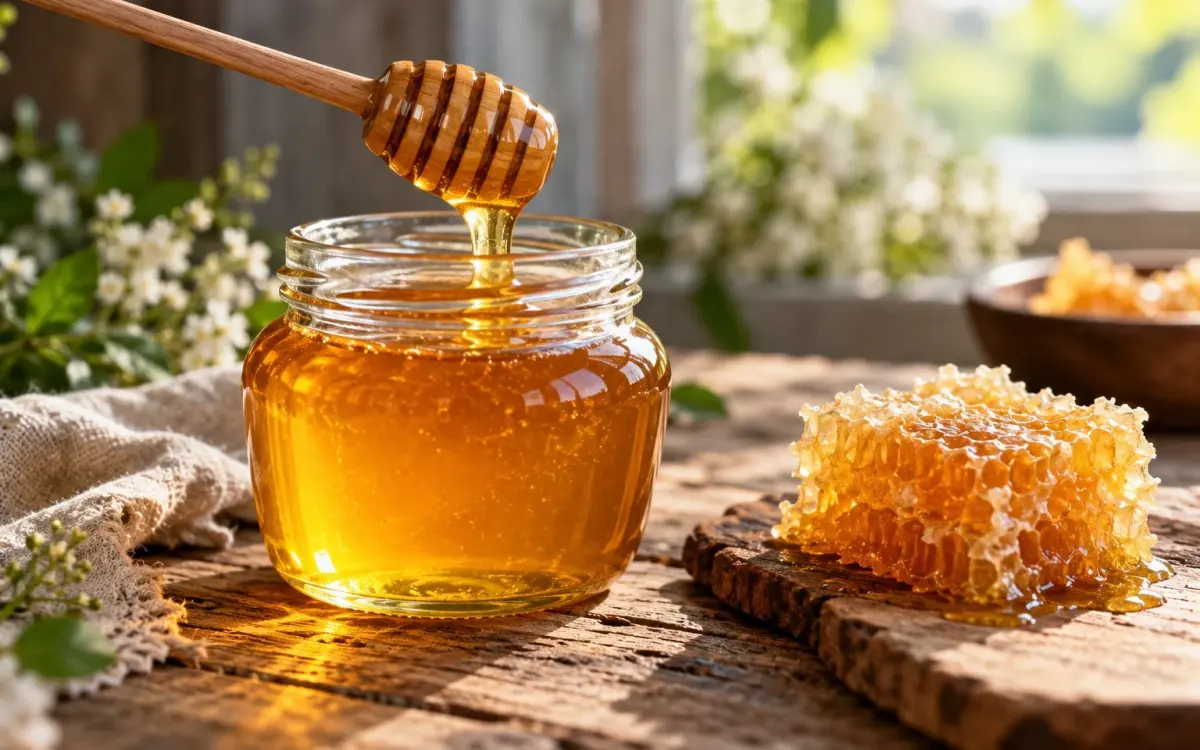
Honey has been used as a food and a home remedy for thousands of years. It is natural and delicious, but it is still mostly sugar, and some popular claims about it are exaggerated. Here is what honey really offers, where the evidence is good, and the risks you should know.
What is in honey?
One tablespoon (about 21 g) of honey has roughly 64 kcal and 17 g of sugars, mainly fructose and glucose. It contains tiny amounts of vitamins and minerals and some plant compounds (polyphenols); darker honeys usually have more of these. In normal portions, honey is not a meaningful source of vitamins or minerals.
Where the evidence is good
Cough in children over 1 year
Systematic reviews of clinical trials suggest that a spoonful of honey before bed can ease cough and improve sleep in children over 12 months with a cold, and it may work at least as well as some over-the-counter cough medicines. The evidence quality is low to moderate, but honey is a simple, safe option for this age group.
Sore throat
Honey in warm water or tea, often with lemon, is soothing for a sore throat. This is comfort care; it does not cure the infection. Try our ginger lemon honey tea.
Claims to treat with caution
- “Honey is healthier than sugar”: honey has a slightly lower glycemic index than table sugar and a little more flavor, so you may use less, but your body treats it as sugar. The WHO counts honey as a “free sugar” and advises keeping free sugars below 10% of daily energy, ideally below 5%.
- Wound healing: sterile, medical-grade honey is used in some wound dressings under medical supervision. Kitchen honey should not be put on wounds.
- Allergies and immunity: there is no good evidence that local honey prevents hay fever or “boosts” immunity.
Important risks
- Never give honey to babies under 1 year. Honey can contain spores of the bacteria that cause infant botulism, a rare but serious illness. This applies to raw and cooked honey and to foods made with it.
- Diabetes: honey raises blood sugar like other sugars; count it in your carbohydrate plan.
- Teeth: honey is sticky and sugary; brush or rinse after eating it.
- Adulterated honey: some cheap honey is mixed with syrups. Buy from trusted producers and check labels.
How to enjoy honey wisely
- Use a teaspoon to sweeten yogurt, oatmeal or tea instead of sugar, not in addition to it.
- Add a little to salad dressings and marinades for flavor.
- Store it closed at room temperature; crystallized honey is still good, just warm the jar gently in water.
Sources
- Honey for acute cough in children: a systematic review, 2023 (PubMed)
- World Health Organization: Botulism fact sheet (honey and infants)
- World Health Organization: Guideline on sugars intake for adults and children
- USDA FoodData Central (nutrient data)
This article is general information, not medical advice. If you have a health condition, talk to your doctor or a registered dietitian.