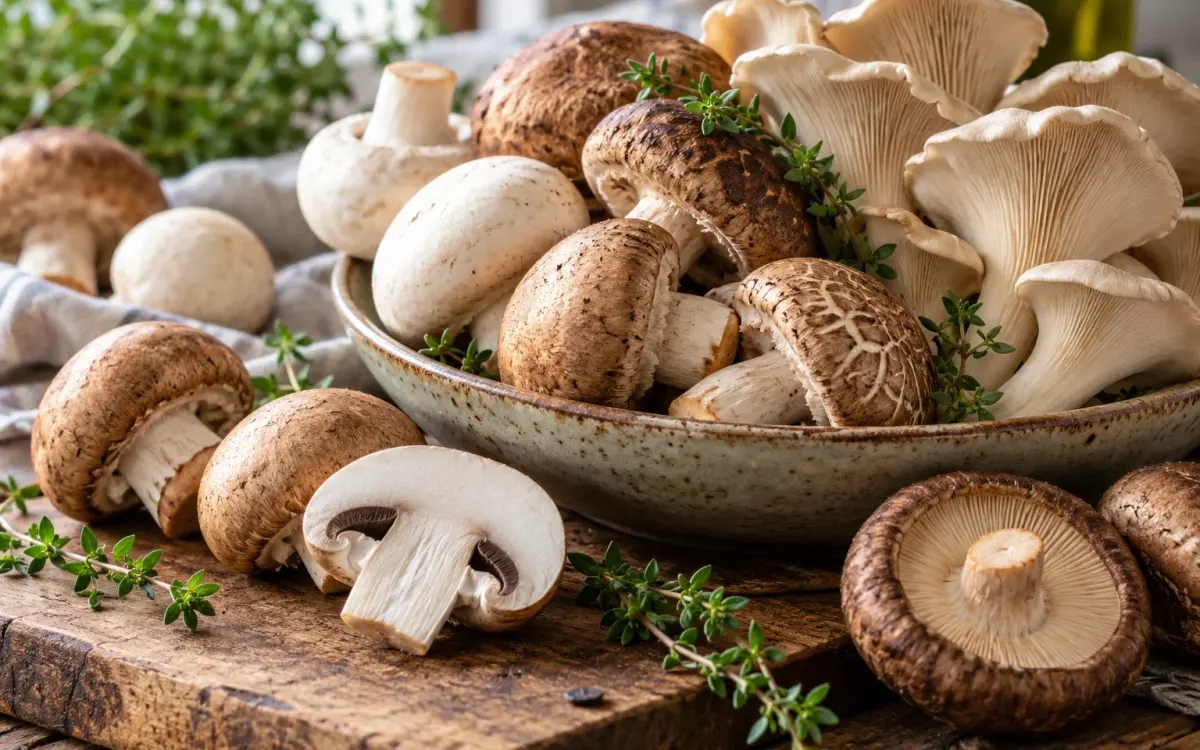
Mushrooms are botanically fungi, not plants, but we cook them like vegetables. They are low in calories, add a deep savory (umami) flavor that can replace some meat and salt, and bring several nutrients that are hard to find in other vegetables, including vitamin D when they have been exposed to light.
Nutrition (white button mushrooms, raw, per 100 g, approximate)
- About 22 calories
- 3 g protein and 1 g fiber
- B vitamins: riboflavin (B2), niacin (B3) and pantothenic acid (B5), important for energy
- Selenium, potassium, copper and phosphorus
- Vitamin D: small amounts normally; UV-exposed mushrooms can provide a large share of daily needs in one serving
- Antioxidants such as ergothioneine and glutathione, and beta-glucan fibers
Possible benefits
- Weight control: few calories, a meaty texture and fiber make meals filling. Replacing part of the ground meat in a dish with chopped mushrooms cuts calories and saturated fat.
- Vitamin D: mushrooms labelled “high in vitamin D” or “UV-treated” are one of the few plant-based sources. You can also leave sliced mushrooms in direct sunlight for 30 to 60 minutes before cooking.
- Immune support: beta-glucans, selenium and B vitamins support normal immune function.
- Heart health: potassium and fiber, and very little sodium or fat, suit a heart-friendly diet.
- Blood sugar: they have almost no sugar and a very low glycemic load.
- Cell protection: ergothioneine and selenium act as antioxidants; research on their long-term effects is ongoing.
Common types and how to use them
- Button and cremini: mild; good raw in salads, in sauces, omelets and pizza.
- Portobello: large and meaty; grill or roast whole as a burger.
- Shiitake: deeply savory; great in soups, noodles and stir-fries. Remove the tough stems.
- Oyster: tender and delicate; quick stir-fries and crispy pan-fried “steaks”.
- Dried porcini and shiitake: soak in hot water for 20 minutes; use the soaking liquid as a rich stock.
Try them in a creamy mushroom risotto, a mushroom Wellington or a lentil and mushroom shepherd’s pie.
How to clean and cook mushrooms
- Wipe with a damp cloth or brush, or rinse quickly just before cooking. Do not soak them.
- Heat a wide pan until hot, add a little oil, then the mushrooms in a single layer. Do not crowd the pan.
- Leave them for 3 to 4 minutes without stirring so they release water and brown.
- Season with salt only after they brown; early salt draws out water and makes them steam.
- Finish with garlic, butter, herbs or a splash of soy sauce.
Cooking makes mushrooms easier to digest and their nutrients more available. Some raw mushrooms, especially shiitake, can cause digestive upset or a rash in a few people, so cook them well.
Storage
Keep mushrooms in their original box or a paper bag in the fridge, not in a sealed plastic bag, which traps moisture and makes them slimy. They keep for about 5 to 7 days. Cooked mushrooms freeze well for up to 3 months.
Safety
- Never eat wild mushrooms unless an expert has identified them. Some deadly species look very similar to edible ones, and cooking does not destroy their toxins.
- Do not eat mushrooms that are slimy, smell bad or have dark, wet spots.
- A few people have a mushroom allergy or digestive discomfort.
- Mushroom supplements and extracts are not the same as food; ask your doctor before using them, especially with medicines.
Frequently asked questions
Are mushrooms a good source of protein?
Not really. They have about 3 g per 100 g, so pair them with beans, lentils, eggs or meat.
Can I eat mushrooms raw?
Button mushrooms are often eaten raw in salads, but most mushrooms are better and safer cooked.
This is general information, not medical advice.