

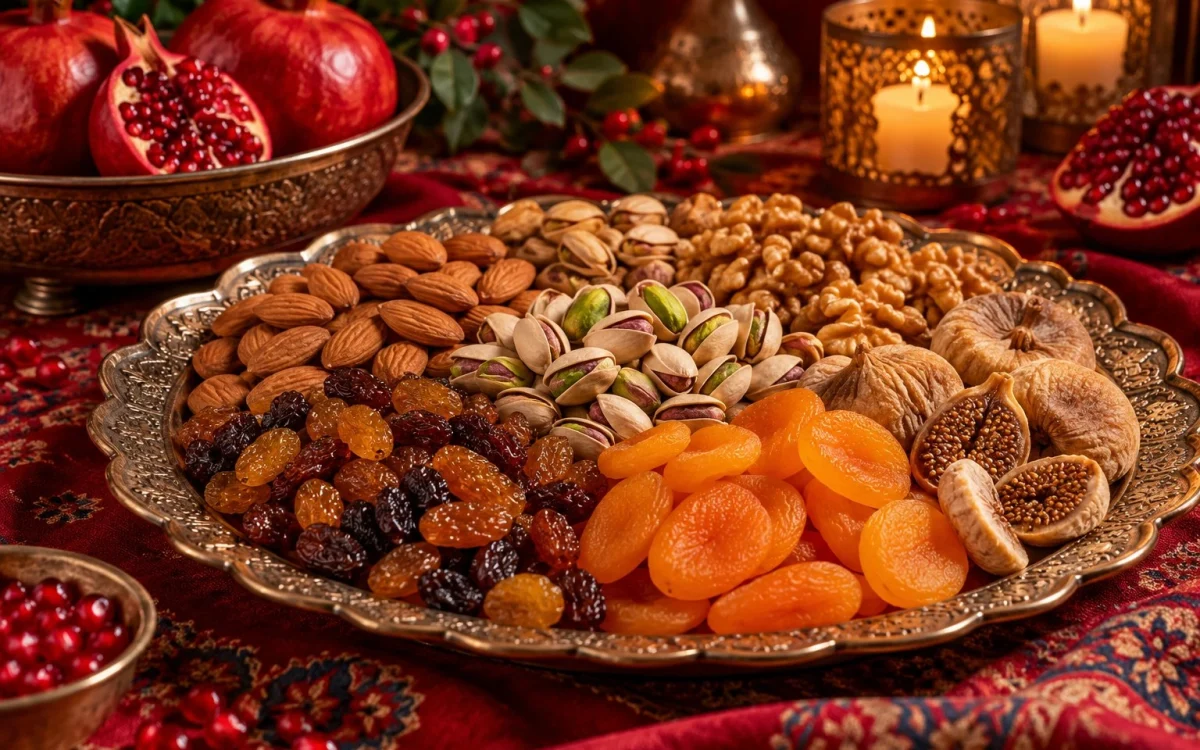
Long before dinner is served on Yalda Night, the table already has a centrepiece: the ajil, the bowl or platter of nuts, seeds and dried fruit that keeps conversation and poetry-reading going until midnight. Yalda falls on 21 December, the longest night of the year, so now is a good moment to plan it. Buying nuts early also gives you time to taste them and avoid stale ones.
What goes into a classic ajil
There is no single rule, but a balanced platter usually combines four groups:
- Roasted nuts: pistachios, almonds, hazelnuts, walnuts and cashews.
- Seeds: salted watermelon, pumpkin and sunflower seeds, the ones families love to crack together.
- Dried fruit: raisins, apricots, figs, mulberries, dried sour cherries and barberries.
- Something sweet and chewy: dried persimmon, lavashak (fruit leather) or small pieces of sohan or gaz.
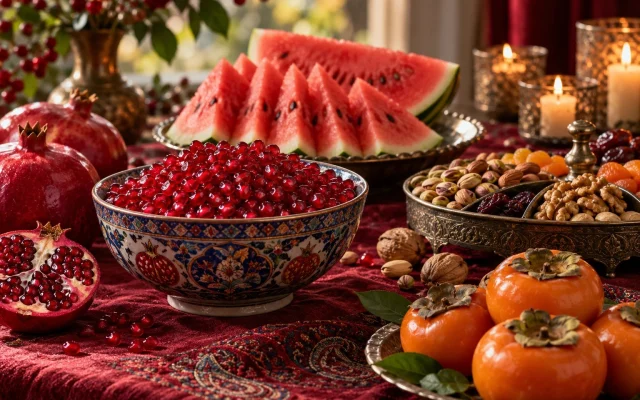
Pomegranate seeds are usually served separately in a bowl next to the ajil, with a little sugar or a drizzle of rose water if you like.
How much to buy
A simple guide is about 100 to 150 grams of mixed nuts, seeds and dried fruit per guest. Aim for roughly half nuts and seeds, a third dried fruit and the rest sweets. If you are hosting children or older relatives, add more soft dried fruit and fewer hard shells.
Roast and salt them yourself
Raw nuts from the bulk store taste far better when roasted at home. Spread them on a tray in a single layer and bake at 150 °C (300 °F) for 8 to 12 minutes, stirring once. Watch almonds and hazelnuts closely, since they darken fast. Toss warm pistachios with a little salt and lemon juice for a classic tangy finish. Let everything cool completely before mixing, because warm nuts trap steam and turn soft in the bowl.
Tips for a better platter
- Keep salted and unsalted nuts in separate sections so guests can choose.
- Cut larger dried fruit such as apricots and figs into bite-size pieces.
- Use a wide, shallow dish or a tiered stand instead of a deep bowl, so small items do not sink to the bottom.
- Add colour: green pistachios, orange apricots, deep red barberries and white almond slivers make the table look festive with no extra effort.
- Put a small empty dish out for shells.
Serving ideas for the night
Place the ajil beside a bowl of pomegranate seeds, sliced watermelon and tea. For the main meal, a stew such as fesenjan or a make-ahead menu keeps the host at the table. Offer hot black tea or a cinnamon and cardamom infusion so guests can sip as they snack.
Storage
Store roasted nuts in airtight jars in a cool, dark place for up to two weeks, or in the fridge for a month. Keep dried fruit separate until serving day, as its moisture softens nuts. Rinse and dry barberries lightly before use.
Who should be careful
Nuts and seeds are common allergens, so label the platter and keep a nut-free option for guests who need it. Whole nuts are also a choking risk for very young children. Dried fruit and sweets are high in sugar, so people managing blood sugar should watch portions.
With a little planning, the ajil becomes more than a snack: it is the generous, shared dish that makes Yalda feel like Yalda.

دیدگاهها