

🔊 Cook mode: big steps, timers and voice control (say “next”), hands-free.
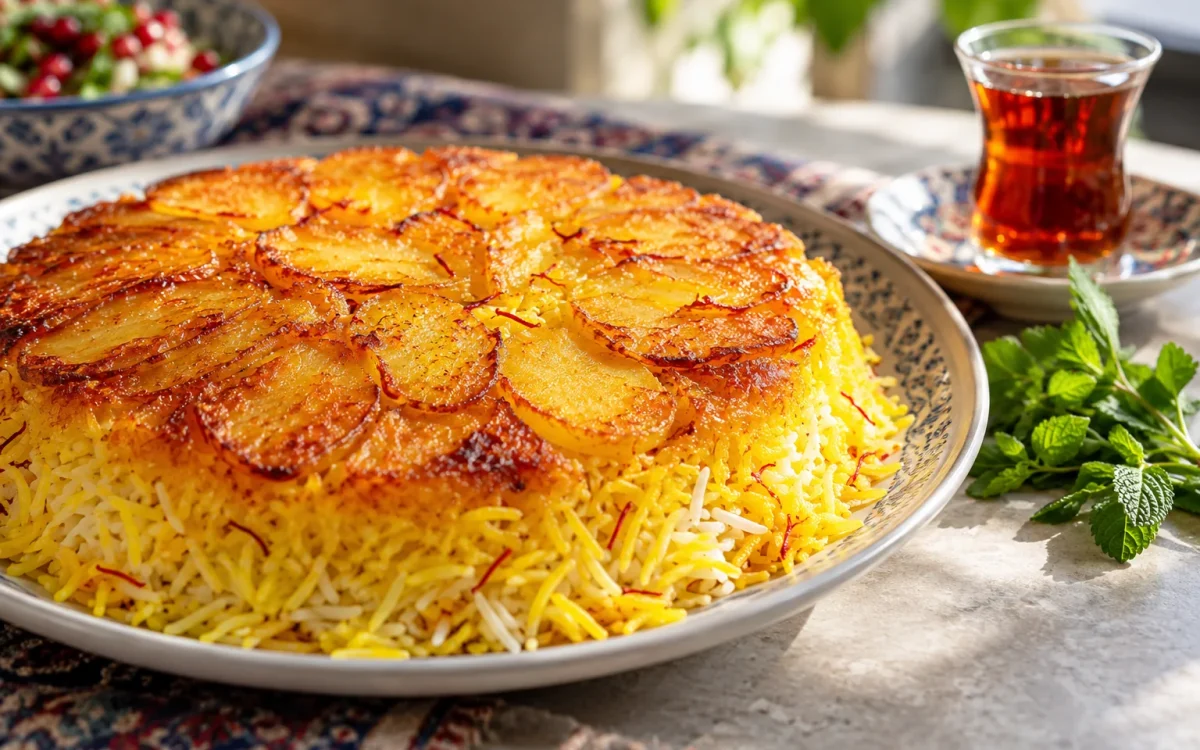
Ask any Persian family what the best part of the meal is, and the answer is almost always the same: the tahdig. The word means “bottom of the pot”, and it is the crisp, golden layer of rice that forms where the pot meets the heat. With cooler evenings and longer dinners, autumn is the perfect time to master it, and potato tahdig is the most forgiving way to start. The potato slices protect the rice, brown evenly and lift out in one beautiful piece.
Why potato tahdig works for beginners
Plain rice tahdig can stick or burn if your pot or heat is off. A layer of sliced potato acts as a buffer. It crisps on the outside, stays soft and creamy inside, and gives you a sturdy base that comes out of the pot almost every time. Many Iranian cooks make it simply because everyone fights over the crispy slices.
What makes the crust crisp
- Parboil the rice correctly. The grains should be soft on the outside but still firm in the center, about 6 to 8 minutes in salted boiling water after a long soak. Overcooked rice turns mushy and the crust will not set.
- Use a good non-stick pot. A heavy, non-stick pot with a tight lid is the easiest tool for the job. Do not use a thin pan that creates hot spots.
- Be generous with fat. Oil, butter, or a mix of both is what fries the crust. Too little and it sticks.
- Wrap the lid in a clean towel. This traps steam from dripping back onto the rice, so the crust stays crisp rather than soggy.
- Do not peek. Opening the lid again and again lets heat and steam escape.
The unmoulding moment
The most nerve-racking step is the flip. Once the rice is cooked, set the closed pot in a sink with a little cold water for about a minute. The sudden cooling loosens the crust from the base. Run a spatula around the edge, place a large flat plate over the pot, and flip with both hands, using oven mitts. If a few slices stay behind, simply lift them out and place them on top. No one will complain.
Variations to try
- Yogurt and saffron tahdig: skip the potato and fry a mix of rice, yogurt, egg yolk and saffron for a thicker, golden crust.
- Lavash tahdig: line the pot with a sheet of flatbread instead of potato for a very thin, shatteringly crisp base.
- Herby rice: stir finely chopped dill and a handful of cooked broad beans into the rice for a dill and fava bean (baghali polo) version.
- Thin-sliced carrot or zucchini: lay these on the base for a colourful alternative.
Serving ideas
Tahdig is a side dish that steals the show. Serve it alongside a rich stew such as ghormeh sabzi or fesenjan, next to grilled chicken or kebab, or with a simple bowl of yogurt and a fresh Shirazi-style cucumber and tomato salad. Break the crust into pieces and pass it around the table, because it never lasts long.
Storage and reheating
Tahdig is best eaten right away, while the crust is still crunchy. Leftover rice keeps in the fridge for up to 3 days in a sealed container. To bring back some of the crunch, reheat slices of the crust in a dry non-stick pan or an oven at 200°C for 8 to 10 minutes, rather than using the microwave, which makes them soft. Cooled rice should not stay at room temperature for long, so refrigerate it within an hour or two of serving.
A note about saffron
Real saffron is expensive, so grind it with a pinch of sugar or salt in a mortar and bloom it in a few tablespoons of hot (not boiling) water. A small amount goes a long way. If you do not have saffron, a little turmeric will give the crust colour, though not the same aroma.
Once you master this method, you will find yourself making tahdig for every family dinner. The recipe card shows the full ingredient list and steps.
Recipe
Persian Potato Tahdig: Golden Crispy Saffron Rice Crust
- Prep
- 2 min
- Cook
- 1 min
- Total
- 3 min
- Calories
- 470
Ingredients
Rice
Saffron
Tahdig
Method
Rinse the rice in several changes of water until the water runs almost clear, then soak it in cool water with 1 tablespoon of salt for 2 hours.
Bring a large pot of water to a boil with 1 tablespoon of salt, add the drained rice and boil for 6 to 8 minutes until soft outside and firm in the center, then drain and rinse gently with lukewarm water.
Mix 2 cups of the cooked rice with the bloomed saffron and the yogurt.
Heat 3 tablespoons of oil in a heavy non-stick pot over medium heat and arrange the potato slices in a tight layer on the bottom.
Spread the saffron rice over the potatoes, then pile the remaining plain rice on top in a mound and poke 4 or 5 holes with a spoon handle.
Mix the melted butter, the remaining 2 tablespoons of oil and the water, and drizzle it over the rice.
Cover the pot with a towel-wrapped lid and cook on medium heat for 10 minutes, then lower to the lowest heat and cook for 40 to 45 minutes without opening.
Set the closed pot in a sink with a little cold water for 1 minute, loosen the edges, place a large plate on top and flip it out in one move.
Tips
- Use a non-stick pot so the crust releases cleanly.
- Do not overcook the rice before steaming, or the crust will not set.
- Serve immediately while the crust is crunchy.
Vitamins and minerals per serving
- Vitamin C16%
- Vitamin E15%
Share of an adult’s daily value (FDA). Estimated from the main ingredients using USDA data, ignoring cooking losses; for information only. What do I need each day?


دیدگاهها