





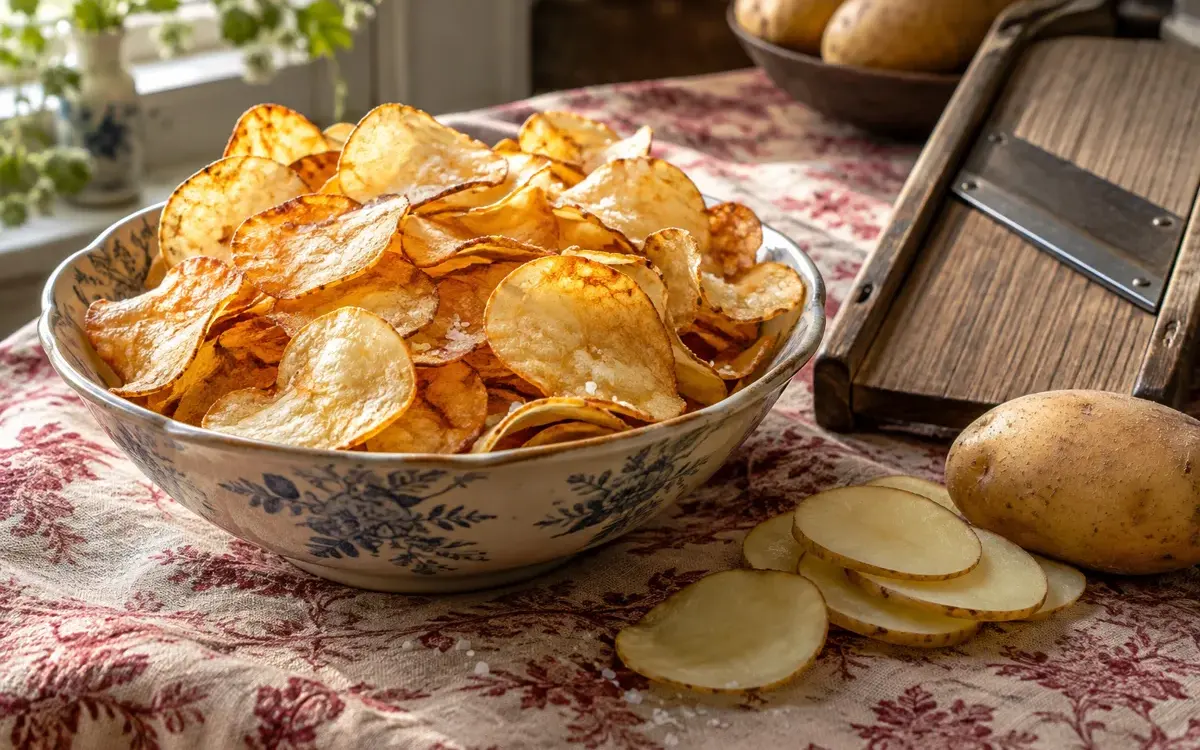
Few snacks have a better origin story than the potato chip. The version you have probably heard goes like this: in 1853, at Moon’s Lake House in Saratoga Springs, New York, a fussy diner, often said to be the railroad tycoon Cornelius Vanderbilt, sent back his fried potatoes for being too thick. The cook, George Crum, sliced them paper-thin and fried them crisp out of spite, and the diner loved them. It is a great story. Historians, however, say it is mostly legend.
What we actually know
- The recipe is older than Saratoga. An English doctor and food writer, William Kitchiner, published a recipe for “potatoes fried in slices or shavings” in his cookbook The Cook’s Oracle in 1817, decades before 1853. Similar recipes appeared in American cookbooks in the 1820s and 1830s.
- Saratoga made them famous. By the mid-1800s, thin fried potatoes were a specialty of resorts around Saratoga Springs and were sold as “Saratoga chips”. That name helped spread them across the United States.
- George Crum was real. Born George Speck, he was a well-known cook of African American and Native American heritage who worked at Moon’s Lake House and later ran his own popular restaurant near Saratoga Lake. He died in 1914.
- The Vanderbilt part is not supported. There is no evidence that Vanderbilt was involved, and Crum himself never claimed to have invented the chip. The dramatic version spread mainly after his death, especially through a 1970s advertising campaign by a company that made chip packaging.
- Other people are credited too. Crum’s sister, Catherine “Kate” Wicks, who also cooked at Moon’s Lake House, was described in her obituary as the person who first made the chips.
From restaurant treat to supermarket snack
For decades, chips were a restaurant or grocery-counter food, often sold loose from barrels or tins, so they went stale quickly. In the 1920s, sealed bags lined with wax paper helped keep them fresh, and mechanical peelers and slicers made large-scale production possible. Flavored chips followed in the 20th century, and today potato chips are one of the most popular snacks in the world.
Why the legend lives on
The Crum story has everything a good legend needs: a famous customer, a proud cook and a happy accident. It is also a reminder that many food origin stories are simplified over time. The real history is less dramatic but still interesting: a simple idea, thin potatoes fried until crisp, spread from cookbooks to resorts to factories.
Make them at home
Slice potatoes as thin as possible with a mandoline, rinse off the starch, dry them very well and fry in oil at about 175 C (350 F) until golden, or bake them on a lined tray. For thicker fries, see our guide to frying with oil safely.