Food allergies affect millions of people, and labels are the first line of defense. In the United States, the Food and Drug Administration (FDA) requires packaged foods to clearly name the most common allergens. Here is how to read those labels, and what to watch for with plant-based alternatives.
The 9 major food allergens
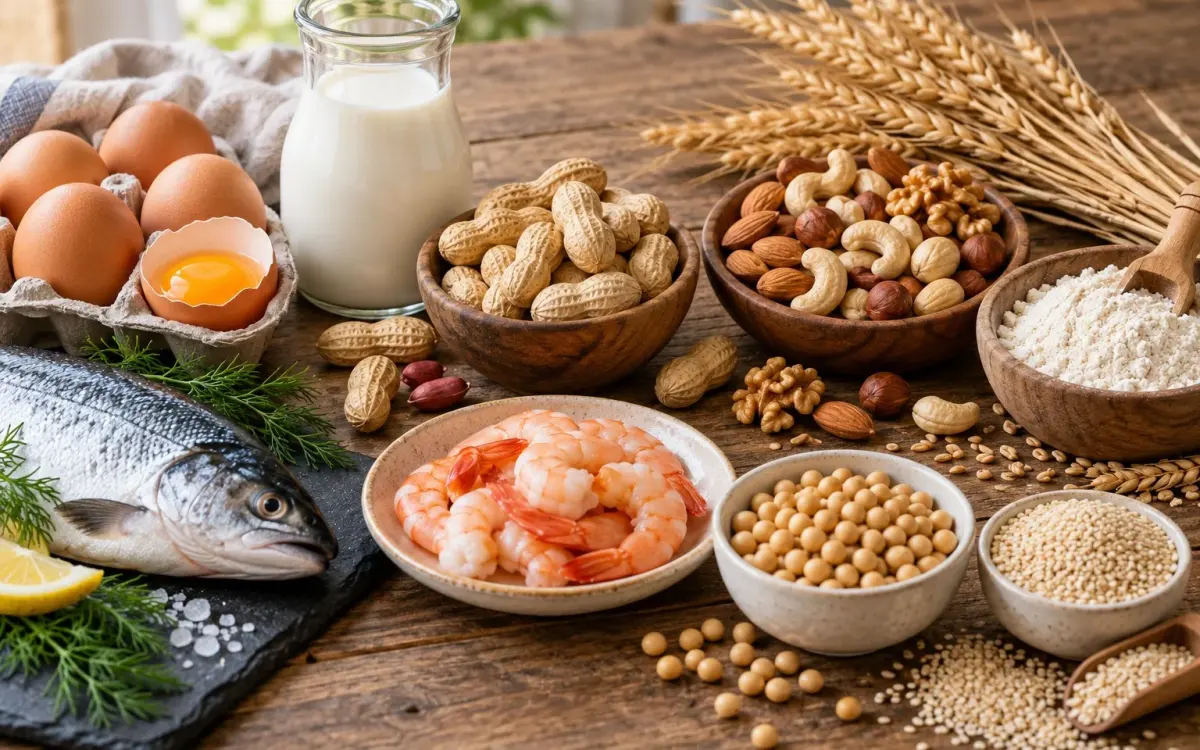
US law recognizes nine major allergens, which cause most serious reactions:
- Milk
- Eggs
- Fish (such as salmon or cod)
- Crustacean shellfish (such as shrimp or crab)
- Tree nuts (such as almonds, walnuts or cashews)
- Peanuts
- Wheat
- Soybeans
- Sesame (added as the ninth allergen in January 2023)
How to read an allergen label
- Ingredient list: the allergen must be named in plain words, for example “milk” rather than only “casein”.
- “Contains” statement: many products add a line such as “Contains: milk, soy” next to the ingredient list.
- Read every time. Companies change recipes, so check the label even on foods you buy often.
What “may contain” means
Statements such as “may contain peanuts” or “made in a facility with tree nuts” warn about possible cross-contact. They are voluntary, and the FDA does not set one required wording. If you have a serious allergy, treat these warnings as real and ask your allergist how to handle them.
Gluten-free labels
For celiac disease, a product labeled “gluten-free” must contain less than 20 parts per million of gluten. Gluten is not one of the nine major allergens, but wheat is, so wheat is always declared.
Plant-based alternatives: check them too
“Plant-based” does not mean “allergen-free”. Many plant foods are made from allergens:
- Soy milk, tofu and many meat substitutes contain soybeans.
- Almond, cashew and coconut milks and cheeses may contain tree nuts.
- Oat drinks can contain traces of wheat unless labeled gluten-free.
- Some vegan products use sesame or peanuts for protein and flavor.
Shopping and kitchen tips
- Keep allergen-free foods in sealed containers, separate from other foods.
- Use clean boards, knives and pans; washing with soap and water removes allergens, while wiping does not.
- When eating out, tell the staff about the allergy before ordering.
- Carry prescribed emergency medicine, such as epinephrine, if your doctor advises it.
This article is general information, not medical advice. If you or your child may have a food allergy, see a doctor or allergist for testing and a personal plan.