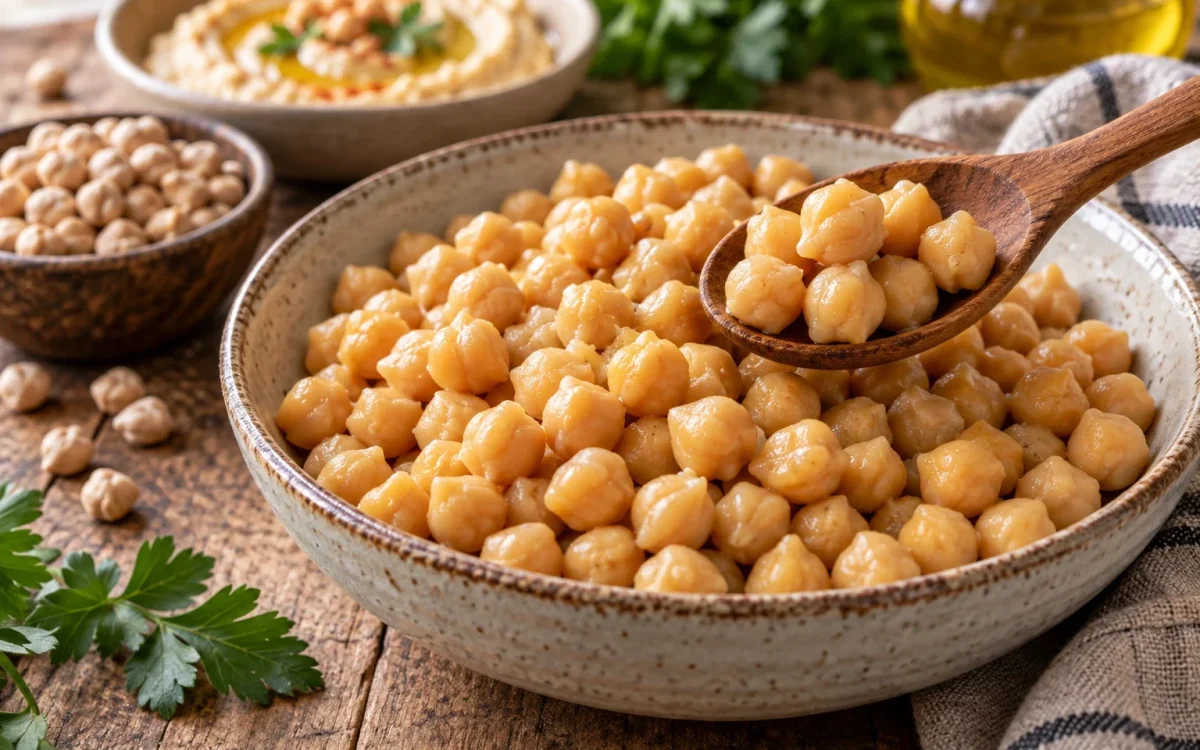
Chickpeas are one of the most useful legumes: affordable, filling and rich in nutrients. They are the base for hummus, falafel, stews and salads across the Middle East, Mediterranean and India.
Nutrition (cooked, per 100 g)
- Around 9 g of protein
- Around 8 g of fiber
- About 165 calories
- Folate, iron, magnesium, potassium, zinc and manganese
Possible benefits
- Plant protein for vegetarians and athletes, best combined with grains.
- Digestion: fiber helps prevent constipation and feeds gut bacteria.
- Blood sugar: low glycemic index; protein and fiber slow the rise in sugar.
- Heart health: fiber, potassium and magnesium support healthy cholesterol and blood pressure.
- Fullness: helps control appetite and weight.
Side effects and who should be careful
- Gas and bloating are common, because chickpeas contain sugars that gut bacteria ferment.
- People with IBS may react to larger portions.
- People with advanced kidney disease may need to limit potassium and phosphorus; ask a doctor.
- Chickpeas can cause allergic reactions in a few people, especially if allergic to other legumes.
How to prepare chickpeas well
- Soak dried chickpeas for 8 to 12 hours, discard the water and cook until very soft.
- Rinse canned chickpeas to remove extra salt and some gas-causing sugars.
- Start with small portions and increase gradually.
- Add a pinch of cumin, fennel or asafoetida to ease digestion.
Easy ways to eat them
- Hummus with olive oil and lemon
- Roasted chickpeas with paprika as a crunchy snack
- Soups, stews and Persian abgoosht
- Salads with cucumber, tomato and parsley
This is general information, not medical advice.