
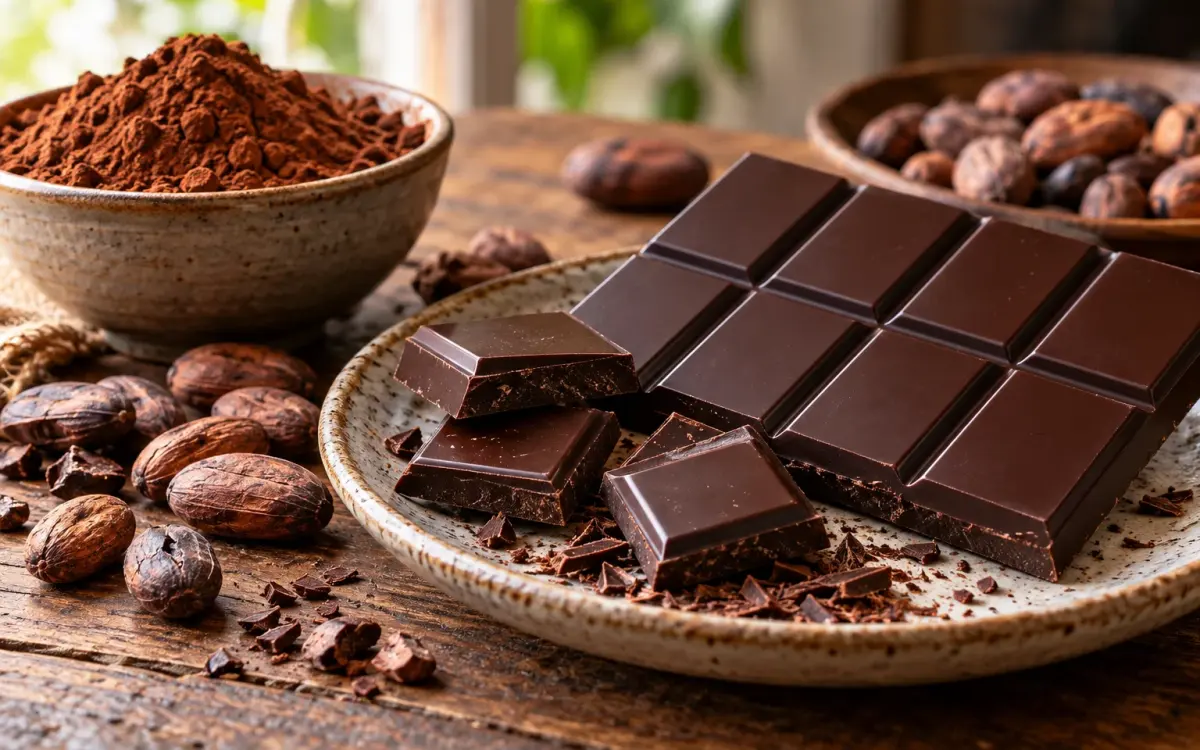
Dark chocolate is more than a treat. Made with a high percentage of cocoa solids, it contains plant compounds called flavanols and a surprising amount of minerals, and research suggests it may benefit blood vessels and mood when eaten in sensible amounts. It is still a high-calorie food, though, so the key is choosing a good bar and keeping the portion small.
What is in good dark chocolate (70 to 85% cocoa, per 30 g, approximate)
- About 170 calories
- 12 g fat, mostly from cocoa butter (about half saturated, mainly stearic acid)
- 7 g sugar and 3 g fiber
- Magnesium (about 15% of daily needs), iron, copper and manganese
- Cocoa flavanols such as epicatechin, antioxidants linked with healthier blood vessels
- About 20 to 25 mg caffeine and more theobromine, mild stimulants (a cup of coffee has about 95 mg caffeine)
Possible benefits
- Heart and blood pressure: studies suggest cocoa flavanols may improve blood vessel function and blood flow and modestly lower blood pressure. Many of the studies used special high-flavanol cocoa, not ordinary chocolate bars.
- Mood and focus: theobromine, caffeine and the pleasure of eating chocolate can lift mood and alertness for a short time.
- Antioxidants: cocoa is among the richest foods in polyphenols.
- Brain and skin: early research suggests small benefits for memory and skin protection from sun damage, but evidence is limited.
Dark chocolate can be part of a healthy diet, but it does not replace fruit, vegetables, exercise or medicine.
The downsides
- Calories and sugar: about 550 to 600 calories per 100 g. Lower-percentage bars contain more sugar.
- Saturated fat from cocoa butter, though stearic acid has a more neutral effect on cholesterol than other saturated fats.
- Heavy metals: tests have found traces of lead and cadmium in some dark chocolates. Vary your brands, keep portions small, and be especially careful in pregnancy and with children.
- Caffeine: may disturb sleep if eaten late, and adds up with coffee and tea.
- Migraine and reflux: chocolate triggers these in some people.
- Kidney stones: cocoa is high in oxalate; people who form oxalate stones may need to limit it.
How much to eat
A reasonable portion is about 20 to 30 grams a day, roughly 2 to 3 small squares, as part of a balanced diet. Enjoy it slowly after a meal instead of as a large snack.
How to choose a good bar
- Pick 70% cocoa or more; the higher the percentage, the less sugar.
- Read the ingredients: cocoa mass (cocoa liquor), cocoa butter, sugar, and perhaps vanilla and lecithin. Sugar should not be the first ingredient.
- Avoid “dark chocolate flavored” coatings with vegetable fats.
- Natural vs Dutched cocoa: alkalized (Dutch-process) cocoa loses a large part of its flavanols. Natural cocoa powder keeps more.
Healthy ways to enjoy it
- A square with a handful of walnuts, almonds or dried apricots
- Dipped strawberries or orange slices
- Grated over oatmeal or yogurt
- Natural cocoa powder in smoothies or a homemade hot chocolate with less sugar
- Baked into a healthier chocolate muffin
Storage
Keep chocolate wrapped in a cool, dry, dark place at about 15 to 18°C. In the fridge it can get a white “bloom” from moisture or fat; it is safe to eat but less smooth. Dark chocolate keeps for up to 2 years unopened.
Safety for pets
Chocolate is toxic to dogs and cats because of theobromine; dark chocolate is the most dangerous. Keep it out of their reach.
Frequently asked questions
Is milk chocolate healthy too?
It has far fewer flavanols and much more sugar, so it is best as an occasional treat.
Can people with diabetes eat dark chocolate?
Often yes, in small portions of 70% or higher, counted as part of the day’s carbohydrate. Ask your doctor or dietitian.
This is general information, not medical advice.