




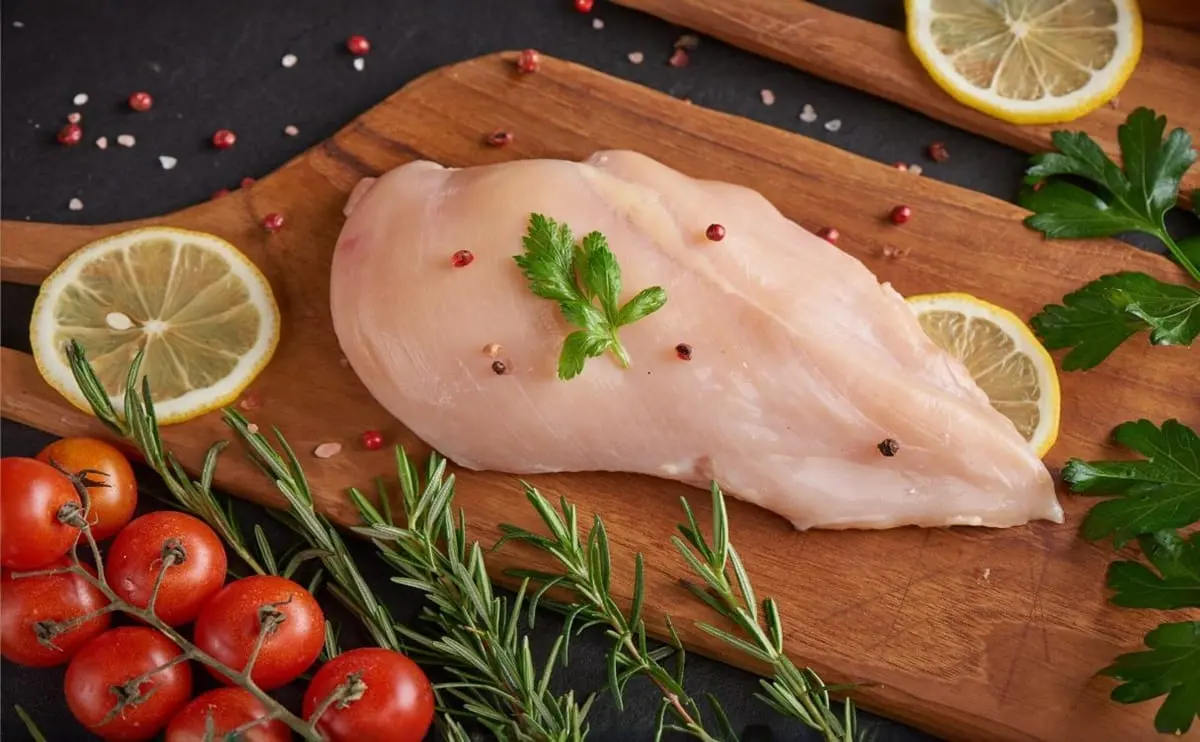
Chicken is one of the most eaten meats in the world. It is a lean, versatile source of high-quality protein, but how you buy, handle and cook it makes a big difference to both health and safety. Here is what chicken offers, its real drawbacks, and the safest and healthiest ways to cook it.
Chicken nutrition (100 g cooked)
- Skinless breast, roasted: about 165 kcal, 31 g protein and 3.6 g fat
- Thigh with skin, roasted: about 230 kcal, 24 g protein and 15 g fat
- A good source of niacin (vitamin B3), vitamin B6, phosphorus and selenium, with some B12, iron and zinc (more in dark meat)
Benefits
- Protein for muscles and fullness: chicken provides all the essential amino acids and helps you feel full.
- Lower in saturated fat than many red meats, especially breast without skin. Replacing processed and fatty red meat with poultry is part of many heart-healthy eating patterns.
- B vitamins and selenium support normal energy metabolism and the immune system.
Drawbacks to know about
- Food poisoning risk: raw chicken often carries Salmonella or Campylobacter. Safe handling and full cooking are essential.
- Processed chicken products such as nuggets, deli slices and sausages are often high in salt and additives; eat them less often.
- Deep frying and skin add a lot of fat and calories.
- Charring: very high-heat grilling until blackened creates compounds best kept to a minimum; marinate and avoid burning.
Safe handling
- Do not wash raw chicken; splashing spreads bacteria around the sink. Cooking kills them.
- Use a separate board and knife for raw chicken and wash hands and surfaces with hot soapy water afterwards.
- Keep chicken in the fridge at 4 C (40 F) or below and cook within 1 to 2 days, or freeze it.
- Thaw in the fridge, never on the counter.
- Cook until the thickest part reaches 74 C (165 F) and the juices run clear.
- Refrigerate leftovers within 2 hours and eat them within 3 to 4 days.
Healthiest ways to cook it
- Roast, bake, grill without charring, poach or stir-fry with a little oil.
- Use yogurt, lemon, garlic and herbs for flavor instead of lots of salt, as in our joojeh kebab.
- Pair chicken with vegetables, beans and whole grains for a balanced plate.
Sources
- World Health Organization: Food safety fact sheet
- World Health Organization: Healthy diet fact sheet
- USDA FoodData Central (nutrient data)
This article is general information, not medical advice. If you have a health condition, talk to your doctor or a registered dietitian.