
Many cooks add olive oil to the pasta water, hoping it will keep the strands apart. In practice, the oil mostly floats on the surface and coats the finished pasta, making it slippery so the sauce does not cling as well. Here is what truly keeps pasta from sticking, and what to do if it already has.
Why pasta sticks
Pasta contains starch. As it cooks, starch on the surface swells and turns sticky, and pieces that touch glue together. The problem is worst in the first two minutes, before the surface sets, and again after draining, when starch dries on the surface.
1. Use enough water
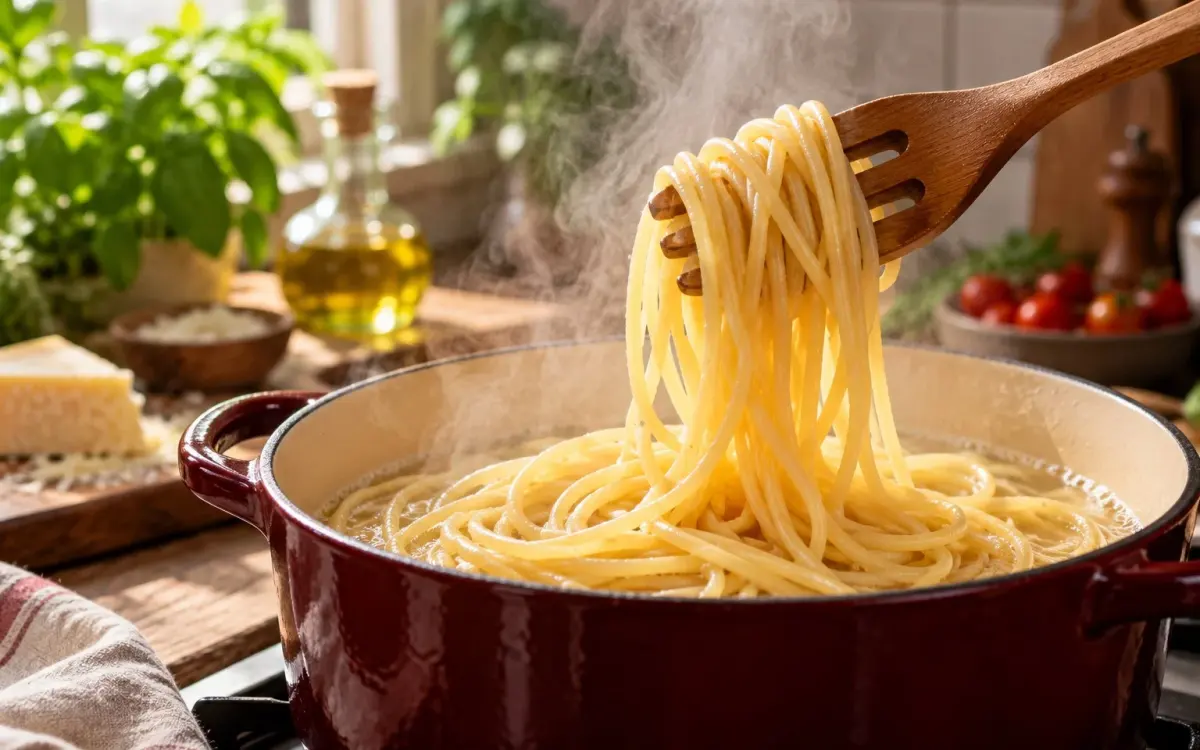
Pasta releases starch as it cooks. In a small pot that starch becomes concentrated, and the pieces glue together. Use about 1 liter of water for every 100 grams of pasta, in a large pot (4 liters for 400 g).
2. Wait for a full boil
Add the pasta only when the water is bubbling vigorously. The hot water sets the outside of the pasta quickly, which helps prevent sticking. Putting pasta into lukewarm water gives a gluey result.
3. Salt the water
Add about 10 grams of salt per liter of water (a tablespoon for 4 liters). It seasons the pasta and improves the flavor; it does not prevent sticking but pasta cooked in unsalted water tastes flat.
4. Stir in the first minutes
The first two minutes are when pasta sticks most. Stir gently as soon as it goes in, and again a few times during cooking. Long pasta like spaghetti: push it down as it softens so it is submerged.
5. Do not rinse cooked pasta, unless it is for a cold salad
Rinsing removes the starch that helps sauce stick. Instead, move the drained pasta straight into the sauce. For a cold salad, rinse with cold water and toss with a little oil.
6. Reserve some pasta water
A ladle of the starchy water loosens a thick sauce and helps it coat the pasta. If cooked pasta waits for a few minutes, a splash of this water keeps it from clumping.
7. Sauce right away
Drain, and immediately toss the pasta with the sauce or finish it in the pan with the sauce for a minute. Sauce coats the surface and prevents strands from fusing.
When is oil useful?
A small amount of oil can help stop water from foaming and boiling over, and a teaspoon of oil tossed with pasta that must wait (for example for a cold salad or baked pasta layers) keeps strands apart. But oil in the cooking water does not prevent sticking, and it makes the sauce slide off.
Fixing pasta that is already stuck
- Clumped in the pot: stir with a fork or tongs over the heat and add a splash of hot water.
- Clumped after draining: put the pasta in a colander and rinse briefly under hot water, shaking, or toss it in a hot pan with a ladle of pasta water and a spoon of oil or butter.
- Stuck in a block (like spaghetti cake): dip it in hot water for 30 seconds and separate with a fork.
Fresh pasta and special types
- Fresh pasta: it has more surface starch; dust it with semolina or flour, cook it in plenty of boiling water for 2 to 4 minutes and add right away to the sauce.
- Lasagna sheets: boil one at a time and lay them flat on oiled foil or toss them in oil if not using at once.
- Gluten-free pasta: more delicate; stir gently and do not overcook.
Learn more in how to cook pasta al dente, and try the technique in one-pot creamy chicken pasta or cottage cheese lasagna.
Frequently asked questions
Does adding salt prevent sticking?
No, but it improves taste.
Can I cook pasta ahead for a party?
Yes. Cook it 1 minute short, rinse briefly, toss with a little oil and refrigerate; reheat in boiling water for 30 seconds.