Good frying is about heat. When the pan and oil are hot enough, the surface of the food seals quickly, turns golden and absorbs less oil. When the oil is too cold, the food sits in it, soaks up grease and turns soggy. When it is too hot, the outside burns before the inside cooks. Learning to control oil temperature is the single most useful frying skill.
Shallow frying vs deep frying
- Pan frying (sautéing): a thin layer of oil, for eggs, cutlets, vegetables and fish fillets.
- Shallow frying: about 1 to 2 cm of oil, enough to come halfway up the food. Turn the food once. Good for Persian kotlet, latkes and schnitzel.
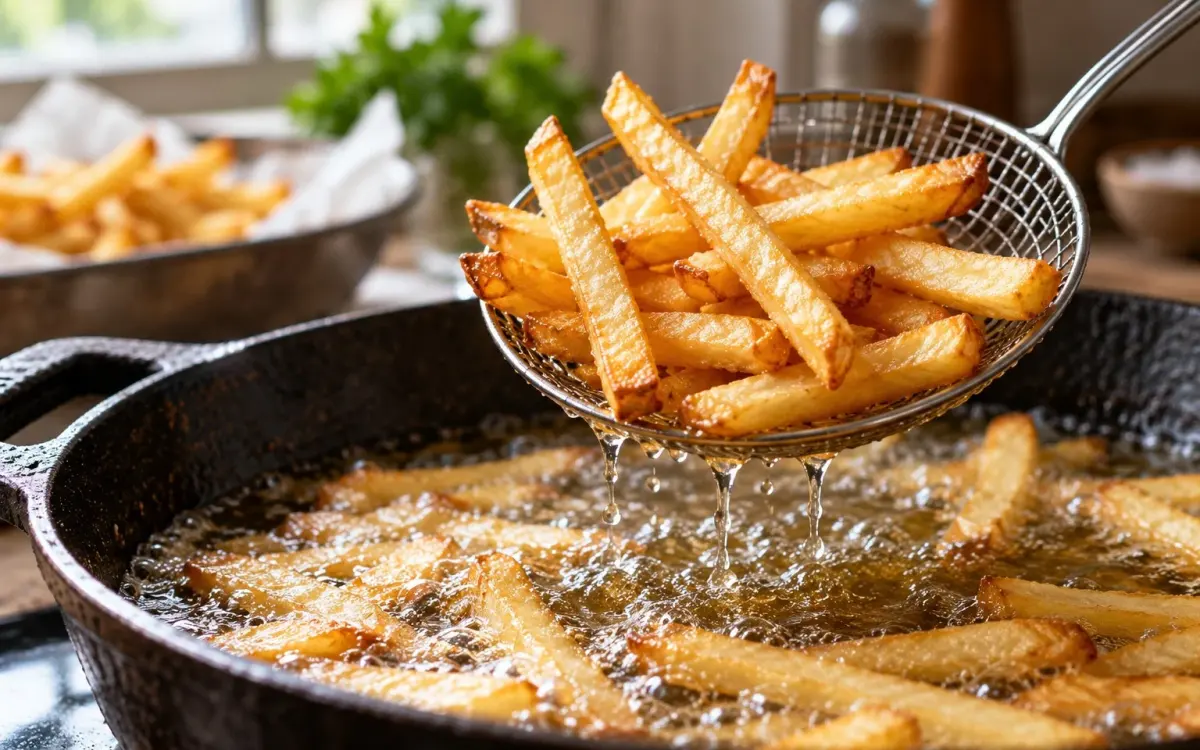
- Deep frying: enough oil for the food to float, usually 5 to 8 cm in a deep, heavy pot. Good for fries, doughnuts and battered fish.
The right oil temperature
- 160 to 170°C: thick foods that need time to cook inside, such as chicken pieces on the bone.
- 170 to 180°C: most frying, including fish, cutlets and fritters.
- 180 to 190°C: quick, crisp results, such as the second fry of French fries or small battered pieces.
A kitchen thermometer is the most reliable tool. Without one:
- Dip the handle of a wooden spoon in the oil: steady small bubbles mean it is ready.
- Drop in a small cube of bread: it should sizzle at once and turn golden in about 30 to 40 seconds.
- If the oil smokes, it is too hot. Turn off the heat and let it cool.
Which oil to use
Choose an oil with a high smoke point and a neutral taste for deep frying: sunflower, canola (rapeseed), peanut, rice bran or refined olive oil. Extra virgin olive oil is fine for gentle pan frying. Butter burns quickly, so mix it with oil or use ghee (clarified butter) for higher heat.
Step-by-step for crisp results
- Dry the food well. Pat it with paper towels. Water causes splattering and steaming.
- Bring food to room temperature for 15 minutes if it is very cold, so it does not drop the oil temperature too much.
- Heat the oil first, then add the food. Never put food into cold oil.
- Lay food away from you into the pan to avoid splashes.
- Do not overcrowd the pan. Too much food at once lowers the oil temperature. Fry in batches.
- Turn once and let a crust form before moving the food, so it does not stick.
- Drain on a wire rack rather than paper towels, so the bottom does not steam and soften. Season with salt right away while it is hot.
Why fried food gets greasy
- The oil was not hot enough when the food went in.
- Too much food was added at once.
- The food was left to drain on a flat plate.
- The batter was too thick or too wet.
Can you reuse frying oil?
Yes, a few times, if it was used for vegetables or potatoes. Let it cool, strain it through a fine sieve or cloth, and store it in a sealed jar in a dark place. Discard it when it darkens, smells bad, foams or smokes at normal frying temperatures. Oil used for fish keeps its smell, so use it only for fish again.
Safety
- Never leave hot oil unattended, and keep children and pets away from the stove.
- Never use water on an oil fire. Turn off the heat and cover the pan with a lid or a damp towel, or use a fire blanket.
- Fill a pot no more than one-third with oil for deep frying.
- Let oil cool completely before moving or discarding it. Do not pour it down the sink.
Lighter alternatives
For a lighter result, try oven roasting or an air fryer. They do not taste exactly like deep frying, but they can make crisp potatoes and vegetables with much less oil. See our tips for crispy roasted potatoes and frying fish skin side first.