
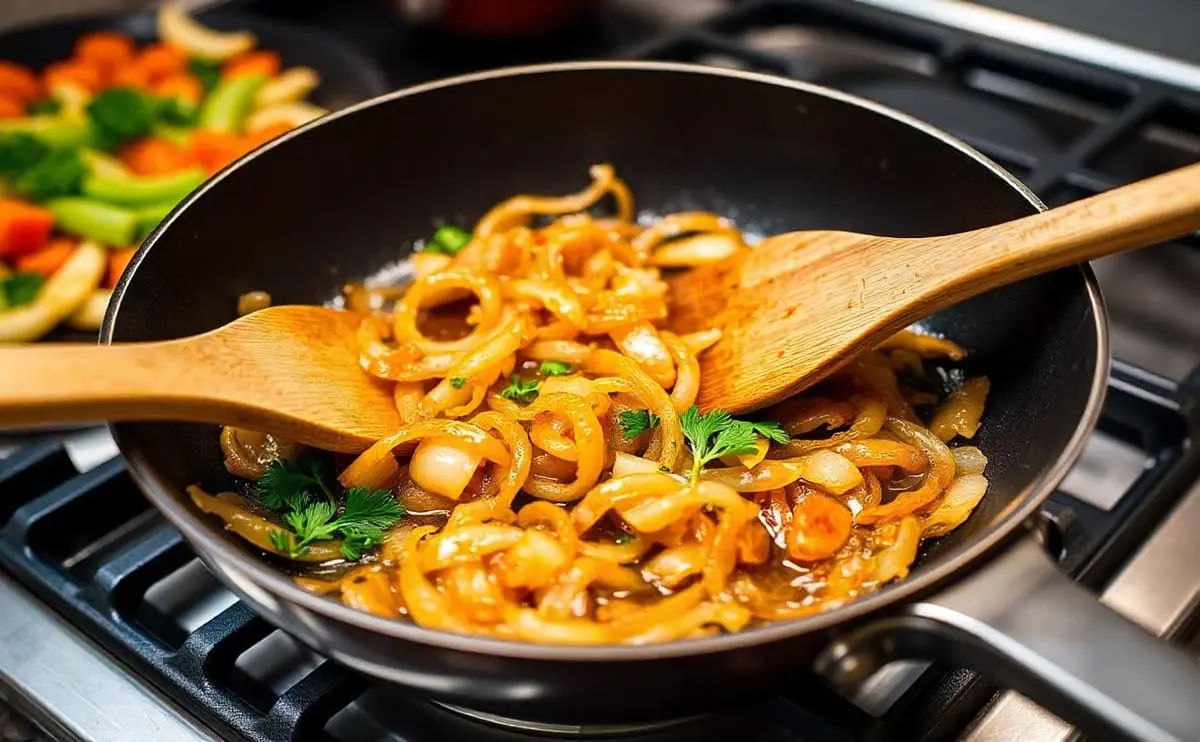
Caramelized onions are sweet, deeply golden and full of flavor. Slow cooking turns the natural sugars in onions brown and jammy, so a cheap, everyday vegetable becomes something special in soups, pasta, burgers, rice and flatbread. The secret is patience and gentle heat: real caramelized onions take at least 30 minutes, and often closer to an hour.
Which onions to use
- Yellow (brown) onions: the best all-round choice, with a good balance of sweetness and depth.
- Sweet onions: caramelize a little faster but can taste one-note sweet.
- Red onions: work well and turn a deep purple-brown; nice on burgers and in salads.
- White onions: sharper and less sweet; better for frying than for slow caramelizing.
What you need
- 4 large onions (about 1 kg), halved and sliced thinly from root to tip
- 2 tablespoons of oil, butter or a mix of both
- Half a teaspoon of salt
- Optional: a splash of water, a pinch of sugar, a little balsamic vinegar
- A wide, heavy pan, such as stainless steel or cast iron, 28 to 30 cm across
Four large onions shrink to about 1 cup of caramelized onions, so it is worth cooking a big batch.
Step-by-step
- Heat the oil or butter in a wide pan over medium heat.
- Add the onions and salt and stir to coat. The pan will be very full at first.
- Cook for about 10 minutes, stirring now and then, until the onions soften and shrink.
- Lower the heat to medium-low. Cook for another 25 to 45 minutes, stirring every few minutes, until golden brown, soft and sweet.
- When brown bits (fond) form on the bottom, add 1 to 2 tablespoons of water and scrape them up. This adds color and flavor.
- Finish with a teaspoon of balsamic vinegar or a little more butter if you like extra depth.
How to tell they are ready
The onions should be soft, jammy and evenly deep golden to medium brown, with a sweet smell and no sharp raw taste. If they are pale yellow and soft, they are only sautéed, not caramelized; keep going.
Fixing common problems
- Onions burning on the edges: the heat is too high. Lower it and add a splash of water.
- Onions steaming and staying pale: the pan is crowded or too small. Use a wider pan or cook in two batches.
- Onions sticking: normal. Deglaze with water and scrape; the fond is flavor, not a mistake.
- No time: you can raise the heat slightly and add water more often, but very fast methods give darker color with less depth.
Do you need sugar?
No. Onions have enough natural sugar. A small pinch can help color when onions are not very sweet, but too much makes them taste candied and can burn.
Other methods
- Oven: toss sliced onions with oil and salt in a covered baking dish and bake at 200°C for about 1 hour, then uncover and stir every 15 minutes for another 45 to 60 minutes.
- Slow cooker: cook sliced onions with butter and salt on low for 8 to 10 hours, then uncover for the last hour to reduce the liquid.
How to use caramelized onions
- On burgers, sandwiches and grilled cheese
- In soups, such as French onion soup or red lentil soup
- On pizza and flatbread, with goat cheese or mushrooms
- Stirred into rice, pasta or mashed potatoes
- In dips with yogurt or sour cream
- In tarts, quiches and omelets
Persian piaz dagh
In Persian cooking, onions are usually fried more quickly in more oil until deep golden and crisp. This is called piaz dagh, and it tops soups like ash reshteh and dips like kashk-e bademjan. It is a cousin of caramelized onions: crisper, slightly bitter and very aromatic.
Storage
Keep caramelized onions in a sealed container in the fridge for up to five days. Freeze them in small portions, such as in an ice cube tray, for up to three months, then add them straight from frozen to soups and sauces.
Frequently asked questions
Why does it take so long?
The onions must first lose their water, and only then can their sugars brown slowly without burning.
Can I use olive oil?
Yes. Butter gives a richer flavor and browns faster; a mix of oil and butter is a good balance.